
How Laptops and PCs Are Evolving in 2026: What to Buy Now and Why
By Mag-Info Tech editorial · 2026-06-10
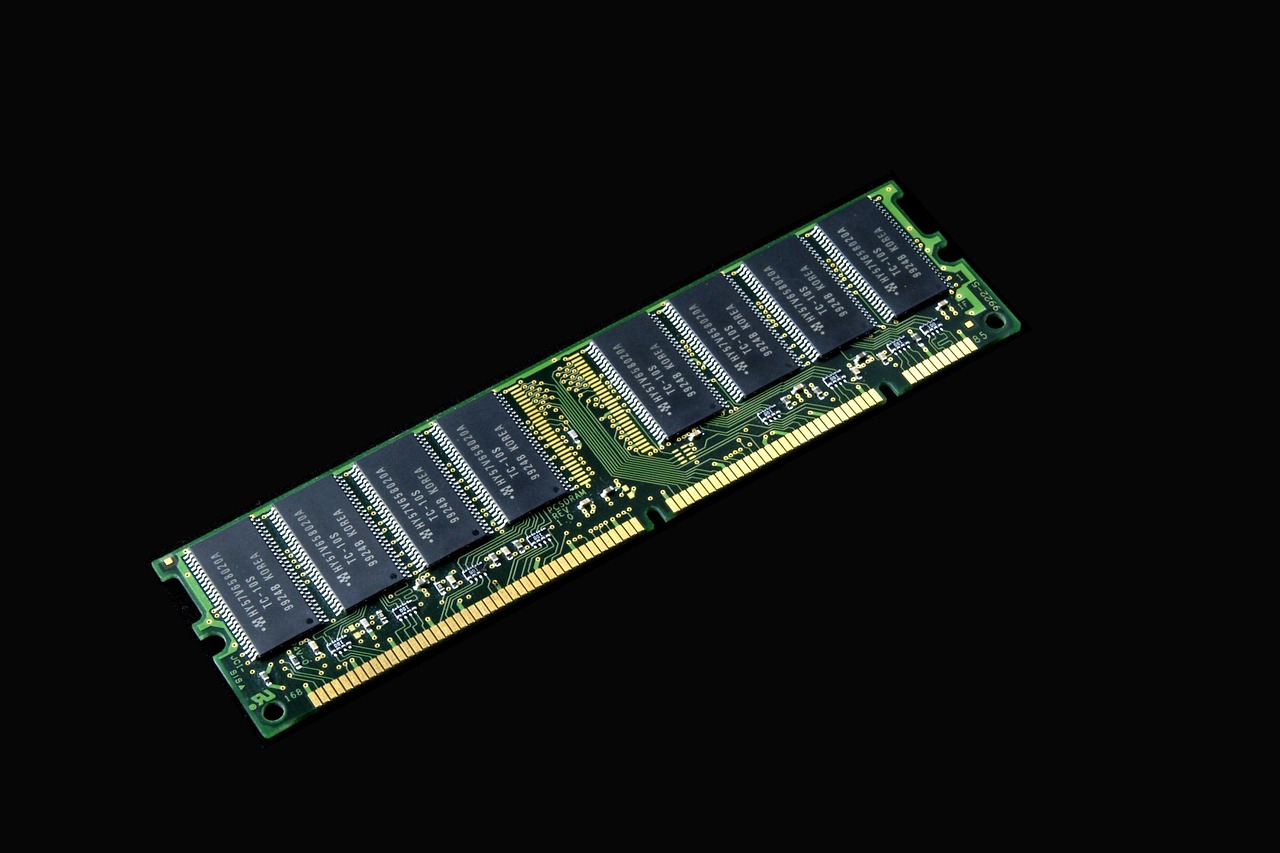
What’s changing in laptops and PCs in 2026
The last two years have compressed a decade of roadmap updates into a single generation. Three themes dominate: on-device AI is now table stakes, ARM-based Windows PCs have matured beyond early experiments, and desktop buyers can choose between ultra-compact all-in-ones and fully modular towers. These shifts are not marketing cycles—they are architectural changes that affect battery life, software compatibility, upgrade paths, and total cost of ownership.
For most users, the practical takeaway is simple: if you regularly run local AI features or creative apps, the newest Windows-on-ARM laptops are worth considering; if you want maximum flexibility and future upgrades, modular desktops remain the safest bet; and if you just need a reliable daily driver, updated thin-and-light Intel/AMD clamshells still deliver the best balance. The goal of this guide is to map these choices to real user profiles and highlight the durable criteria you should apply before buying.
Work laptops: thin-and-light vs. AI co-processors
Thin-and-light business laptops are no longer just about weight and screen quality; they now include dedicated low-power AI chips that handle background tasks like real-time noise suppression, live transcription, and secure document processing without waking the main CPU. The latest Intel Core Ultra Series and AMD Ryzen AI 9 families embed these accelerators directly into the silicon, so battery life remains in the 8–12 hour range even with AI features enabled.
For corporate IT managers, the standout families are Dell’s Latitude line with Intel Core Ultra and HP’s EliteBook with Ryzen AI. Both lines offer vPro-class manageability, MIL-STD durability, and optional 5G modems. For freelancers and remote workers, Lenovo’s ThinkPad X1 Carbon Gen 12 and Acer’s Swift Edge 2 deliver similar core performance in under 2.5 lb chassis with 14-inch OLED displays. The key question to ask is whether your organization actually uses the AI features: if the answer is no, you can save money by choosing the previous generation without the AI chip.
Windows on ARM: when the trade-offs make sense
Windows on ARM has crossed the chasm from early adopter curiosity to mainstream option. Qualcomm’s Snapdragon X Elite platform now runs the full Windows stack, including x86 emulation, at speeds that approach mid-range Intel chips while sipping under 10 watts for light workloads. Battery life on devices like the Samsung Galaxy Book 4 Edge and the ASUS Vivobook S 15 now routinely exceeds 18 hours of mixed use, a figure that was unthinkable on x86 just two years ago.
The catch is app compatibility and driver support. If you rely on legacy x86 applications—especially niche engineering or creative tools—test them first on ARM Windows. Microsoft’s emulation layer is robust but not universal, and some GPU-accelerated apps still fall back to CPU rendering. For web developers, Python notebooks, and Office 365 users, ARM Windows is a clear win. For anyone else, keep a return window open or choose a hybrid x86/ARM model like the Lenovo Yoga Book 9i that can switch modes automatically.

Desktop PCs: ultra-compact all-in-ones vs. modular towers
Desktop buyers face two distinct paths. Ultra-compact all-in-ones such as Apple’s iMac and Microsoft’s Surface Studio 2+ pack a 24–28-inch 4K display, discrete GPU, and a full desktop CPU into a single unit no thicker than a textbook. They are ideal for designers and analysts who value one-cable simplicity and color-accurate screens, but they sacrifice upgradeability.
Modular towers, by contrast, remain the domain of enthusiasts and small businesses that need to swap GPUs, add storage, or upgrade RAM without replacing the entire system. ASUS’s ROG Strix G16, Lenovo’s Legion Tower 7i, and HP’s Z2 Tower G9 all ship with tool-less access, PCIe 5.0 slots, and high-wattage power supplies rated for next-gen GPUs. The practical benefit is longevity: a well-chosen tower can last six to eight years with only a graphics card refresh every three to four years, whereas an all-in-one is typically replaced when the display or CPU becomes obsolete.
Gaming laptops: GPU power vs. thermal ceiling
Gaming laptops in 2026 have hit a thermal ceiling: the top-tier GPUs now draw 175–200 watts, but the chassis and battery can only dissipate 90–110 watts continuously without throttling or fan noise. As a result, the best gaming laptops are not simply faster—they are smarter about power delivery and cooling. NVIDIA’s RTX 50-series GPUs use a new vapor-chamber design that spreads heat across the entire chassis, while AMD’s RDNA 4 mobile GPUs rely on AI-driven fan curves that ramp only when needed.
For competitive esports players, the Razer Blade 18 and ASUS ROG Zephyrus G16 offer the best balance of performance and portability, both weighing under 5 lb and fitting into most backpacks. For desktop replacement gamers who never move the machine, the Alienware m18 and Lenovo Legion Pro 7i provide maximum GPU power at the cost of bulk and battery life. The key metric to watch is sustained frame rate under load: if the laptop drops below 60 fps after 30 minutes of Apex Legends or Cyberpunk 2077, the cooling system is undersized for the GPU.




Real results from MEFAI's AI. Get $50 off the Pro plan.
Sponsored · Past performance is not indicative of future results. Not financial advice.


AI-focused PCs: dedicated NPUs vs. integrated AI accelerators
AI-focused PCs now come in two flavors. The first integrates a Neural Processing Unit (NPU) alongside the CPU and GPU, like Qualcomm’s Snapdragon X Elite or Intel’s Core Ultra with its AI Boost block. These chips handle lightweight AI tasks—real-time translation, background blurring, and local LLM inference—without engaging the main processors, extending battery life by 20–30 percent in mixed workloads.
The second flavor is the AI workstation, exemplified by Dell’s Precision 7000 series and HP’s ZBook Fury. These machines pair a high-end CPU with a discrete AI accelerator such as NVIDIA’s RTX Ada or AMD’s Instinct MI300X, enabling local training of small language models and real-time ray tracing. They are overkill for most users but essential for data scientists, 3D animators, and engineers running simulation software. The deciding factor is whether you need to run AI models locally or can offload them to cloud GPUs. If the latter, an NPU-equipped ultrabook is sufficient; if the former, budget for an AI workstation and plan for a 1200–1500 watt power supply.
Displays and input: OLED, mini-LED, and haptic keyboards
Display technology has stabilized around two high-end options. OLED panels now dominate ultrabooks and premium 2-in-1s, offering perfect blacks, 120 Hz refresh rates, and HDR1000 at under 10 mm thickness. Mini-LED backlights are the preferred choice for desktop monitors and gaming laptops, delivering 1000 nits sustained brightness, 2000-zone local dimming, and 240 Hz refresh rates without burn-in risk. The durability trade-off is real: OLED screens are still more susceptible to burn-in in static HUDs, while mini-LED panels require careful thermal management to avoid backlight blooming.
Input devices have also evolved. Mechanical keyboards with haptic feedback and low-profile switches are now standard on business ultrabooks and gaming laptops alike, while desktop peripherals increasingly use optical-mechanical switches that combine the feel of mechanical keys with the reliability of membrane designs. For users who type all day, the difference between a scissor-switch and a haptic low-profile board can be as important as CPU choice.
Connectivity: Wi-Fi 7, Thunderbolt 5, and USB4 v2
The connectivity stack has moved to Wi-Fi 7 and Thunderbolt 5, both of which double previous-generation bandwidth while reducing latency. Wi-Fi 7’s 320 MHz channels and Multi-Link Operation let crowded networks sustain 4–5 Gbps in real-world use, while Thunderbolt 5 pushes 120 Gbps over a single cable, enabling 8K displays, 32 Gbps external SSDs, and daisy-chained 4K monitors without compression artifacts. USB4 v2 offers similar speeds but lacks Thunderbolt’s certification ecosystem, so for pro users the choice is clear: prioritize Thunderbolt 5 on laptops and desktops that need single-cable docking.
The practical implication is that if your workflow involves large file transfers, multi-monitor setups, or external GPU enclosures, the newest connectivity standards can cut setup time by half and eliminate dongle clutter. For everyone else, last-generation Thunderbolt 4 and Wi-Fi 6E remain perfectly adequate and usually cheaper.

How to choose: a durable buying checklist
Start by listing your top three workloads—document editing, photo editing, or AAA gaming—and map them to the product families above. If battery life is non-negotiable, Windows-on-ARM ultrabooks are the only realistic option today. If you need long-term upgradeability, a modular desktop tower is still the best investment. If your job involves local AI processing, prioritize NPU-equipped laptops or AI workstations depending on model complexity.
Next, test the display in person if possible. OLED offers the deepest blacks and thinnest bezels, but mini-LED provides higher sustained brightness and zero burn-in risk. For input, decide between haptic low-profile keyboards for portability or mechanical switches for tactile feedback. Finally, check the connectivity: Thunderbolt 5 and Wi-Fi 7 are future-proof, but they add cost; if your peripherals don’t need the speed, last-generation ports are fine.
What to watch next
Two trends are worth monitoring over the next 12 months. First, the maturation of ARM-based Windows PCs: as Qualcomm and its OEM partners refine the emulation layer and driver support, the gap between x86 and ARM will narrow, making ARM the default for ultrabooks. Second, the rise of AI-accelerated peripherals—smart monitors that run on-device vision models, and AI mice that adapt click resistance based on grip pressure—will blur the line between PC and accessory.
For buyers, the message is clear: the hardware you purchase today will likely outlast the software features that define it, so prioritize the aspects that matter most—battery life, display quality, upgrade path, and connectivity—over the latest marketing buzzword. The best laptop or PC in 2026 is the one that still feels fast and reliable in 2029.
More in Hardware & Gadgets
Apple Expands App Store Subscription Bundles to Include Multiple Apps and Services
Apple will let iPhone users buy single-bill bundles of subscriptions from different apps and services later this year, simplifying spending and potentially boosting app discovery.
Laptops and PCs for Beginners: A Practical Guide to Your First Computer
A clear, evergreen guide to choosing your first laptop or desktop for work, AI tools and light gaming, with beginner-friendly picks and what to look for before you buy.
Free vs Paid GPUs and AI Hardware: What Actually Works for Your Workload
A clear, evergreen guide to choosing between free cloud GPUs and paid hardware for AI work—who each option fits, what paid tiers really unlock, and how to decide without overspending.