
How an AI-Augmented Patient Outpaced the System in a Rare Cancer Fight
By Mag-Info Tech editorial · 2026-06-28

A routine check became a life-or-death pivot
Connor Christou had spent years refining a personal data pipeline. He wore a Whoop band at night, an Oura ring during the day, and submitted to 80–100 blood biomarkers every year. In late 2025 his annual workup came back clean. By April 2026 he was preparing for minor surgery when pre-op bloodwork revealed two silent blood clots. A few hours later the surgeon walked in and delivered the news: an 11-by-11-by-8 cm mass sat behind his sternum. A biopsy confirmed aggressive non-Hodgkin’s lymphoma—a diagnosis that typically appears in one in 420,000 people and is unrelated to lifestyle. Christou’s tumor had grown from nothing to detectable size in roughly three months; in three more weeks it would have reached stage four. He called it “lucky in my unluckiness” because the clots, not the cancer, had triggered the discovery.
The first oncologist recommended the milder of two standard regimens. Christou booked the first infusion for three days later, but the night before he sought a second opinion. The second doctor immediately pushed for the more aggressive continuous-infusion protocol. That single decision window showed how quickly treatment choices can diverge—and how a patient’s ability to integrate and interrogate disparate data streams can change outcomes.
From quantified-self to quantified-cancer
Christou’s response was to feed every artifact of his regime into an AI assistant. He ingested recent blood panels, prior biomarker trends, wearable sleep and heart-rate data, scan images and reports, supplement logs, and daily journal entries. The AI cross-referenced these inputs with current clinical guidelines, emerging research abstracts, and real-time PubMed updates. Each chemotherapy cycle’s lab results were folded back into the model, allowing it to suggest dose adjustments or supportive interventions within hours of results posting. He described the system as “a second pair of eyes that never sleeps,” catching subtle shifts in his neutrophil counts or lactate dehydrogenase that might otherwise have been filed away until the next scheduled oncology visit.
For patients facing rare or aggressive cancers, the standard pathway is often a linear sequence of scans, biopsies, and protocol-driven treatments. But Christou’s approach inverted that flow: he treated his illness as a dynamic data problem where the model’s predictions could be stress-tested against new evidence. The practical effect was a compression of the typical lag between data acquisition and clinical action—from days or weeks to hours.
Why the system still leaves gaps
Christou’s experience also highlighted systemic blind spots. His first oncologist’s initial plan was consistent with published risk-stratification tables for low-burden disease, yet the AI, scanning recent cohort studies and toxicity profiles, flagged that his fitness metrics and biomarker trends actually skewed toward higher resilience. The AI recommended escalation to the more aggressive regimen, which the second oncologist immediately validated. This gap—between population-level guidelines and an individual’s real-time physiology—is where many patients fall through the cracks. Oncology protocols are necessarily conservative to protect large groups, but they can under-respond to outliers who are otherwise robust.
Another friction point was interoperability. Christou had to manually upload PDFs of scans and lab reports; his wearable data lived in separate silos; supplement logs were scattered across notes apps. Even with an AI front-end, the process required repeated data wrangling. The episode underscores how health-data fragmentation persists despite years of interoperability mandates, leaving tech-savvy patients to build jury-rigged pipelines.
The regulatory and ethical guardrails in play
Using an AI assistant to guide oncology decisions raises immediate questions about oversight. Christou’s model was not a cleared medical device; it was a personal tool fed by public research and his own records. Under current FDA guidance, software that “analyzes or interprets medical images or data to recommend treatment” is classified as a Class II device requiring 510(k) clearance. Christou’s use case—integrating non-cleared AI with physician judgment—falls into a gray area. Hospitals and insurers are wary of liability if a patient-driven AI recommendation diverges from protocol. Yet the same hospitals routinely allow patients to bring in printed research papers or second opinions; an AI assistant is simply a faster, more comprehensive version of the same behavior.
Ethically, the key is transparency. Christou shared every AI-generated insight with both oncologists and documented the rationale behind each suggestion. That transparency became part of the medical record and allowed clinicians to veto or modify any AI recommendation they deemed unsafe. The model’s role was advisory, not autonomous—a distinction that may become the norm as patients increasingly augment their own care.
What hardware and software made this possible
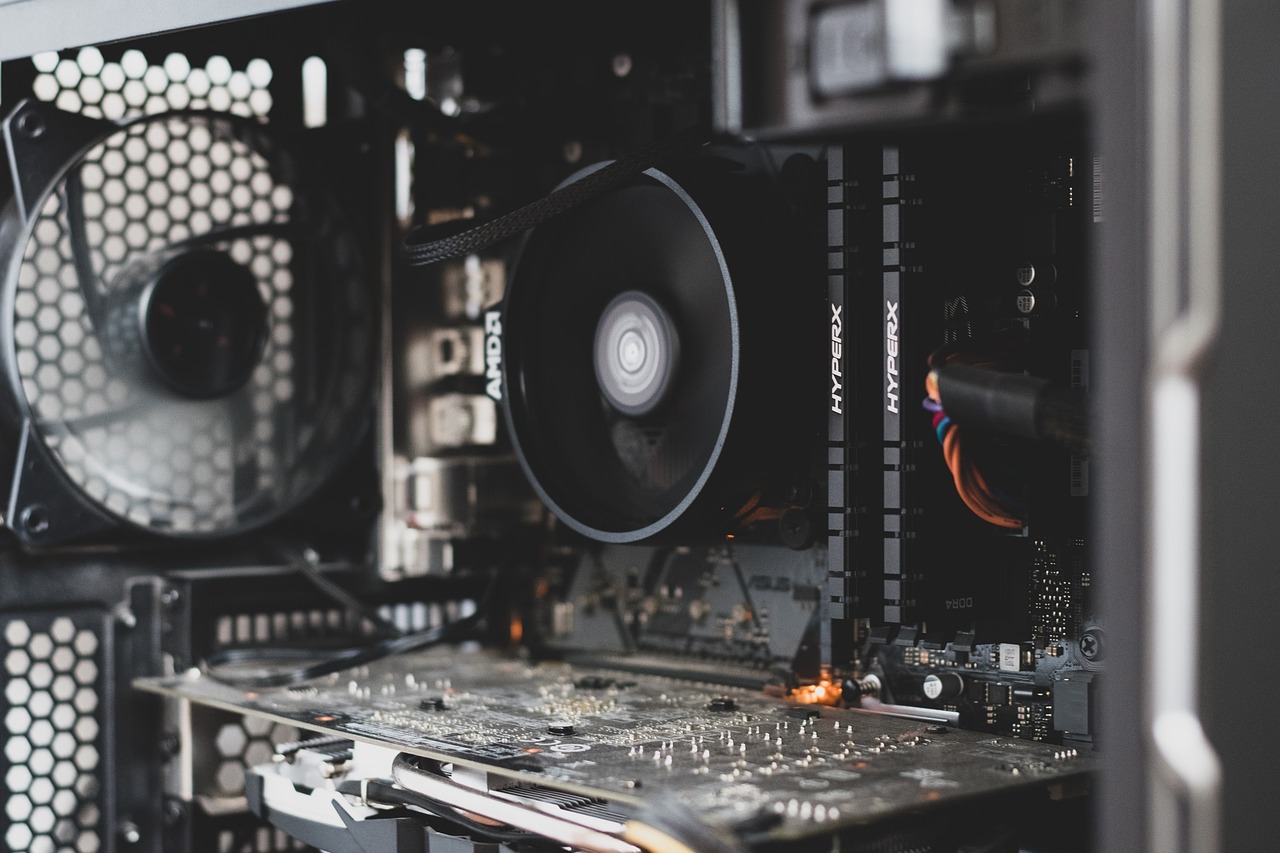
Christou’s pipeline relied on three layers: data ingestion, model orchestration, and clinical feedback. On the hardware side, he used a Whoop 5.0 band for continuous heart-rate variability and sleep staging, an Oura Gen3 ring for temperature and activity, and a Dexcom G7 CGM for interstitial glucose. Lab data came from Quest and Labcorp portals via CSV exports; imaging was downloaded as DICOM files and converted to JPEG series for quick review. Supplement logs were typed into a Notion database and exported as JSON. The AI layer ran on a mid-tier workstation with an NVIDIA RTX 4070 GPU, using a local instance of Claude Code to parse PDFs, extract tables, and run Python scripts that aligned trends with research abstracts. Outputs were pushed to a private Obsidian vault where he maintained a daily decision log synced to his phone via Syncthing.
Real results from MEFAI's AI. Get $50 off the Pro plan.
Sponsored · Past performance is not indicative of future results. Not financial advice.

For most patients, assembling this stack would be prohibitive. Whoop and Oura require subscriptions; lab exports are not standardized; DICOM viewing tools are niche; and running a local LLM demands technical comfort. Yet the trajectory is clear: as consumer wearables add medical-grade certifications and EHRs begin to expose FHIR APIs, the barrier to entry will fall. Within two to three years, a patient could plausibly run a similar pipeline on a smartphone with a certified app and a cloud-based model—assuming regulatory pathways evolve to accommodate it.
The human factor: clinicians’ reactions and patient trust
Christou’s oncologists were initially skeptical of the AI’s role but became more receptive as the data aligned with clinical intuition. The second oncologist, who had recommended the aggressive protocol, praised the model’s ability to surface nuanced toxicity trade-offs—for example, predicting which nadir counts would recover fastest given Christou’s prior biomarker stability. Still, both doctors emphasized that the AI’s recommendations were treated as decision support, not directives. One noted, “The machine can see patterns in 10,000 variables, but it doesn’t know the patient’s fears or family context.” That human layer remains indispensable.
Trust, however, is bidirectional. Patients must be willing to share granular data and accept that AI may recommend actions outside standard protocols. In Christou’s case, he was uniquely positioned: a founder with engineering literacy, the time to curate data, and the financial means to absorb out-of-pocket costs. For most patients, the hurdle is not just technical but psychological—overcoming the instinct to defer entirely to authority. Clinicians, in turn, must learn to evaluate AI outputs the way they evaluate journal articles: for methodological rigor and relevance to the individual case.
What to watch next: policy, products, and personal pipelines
Three developments will determine whether AI-augmented patient pipelines become mainstream:

-
Regulatory clarity. The FDA is drafting guidance on “patient-directed AI” that sits outside traditional device pathways. A clear framework would allow companies to build certified tools that integrate with EHRs and wearables without requiring full 510(k) clearance for every model update. Until then, patients like Christou operate in a legal gray zone.
-
Interoperability standards. FHIR R5 and USCDI v3 are beginning to expose imaging, labs, and device data in structured formats. Once EHRs and wearable platforms adopt these uniformly, the data wrangling burden will drop sharply. Expect startups to emerge offering turnkey “oncology data hubs” that auto-ingest and normalize inputs.
-
Insurance reimbursement. If AI-driven dose adjustments or toxicity predictions reduce hospitalizations or emergency visits, payers may cover the cost of certified tools. Early pilots with remote monitoring in oncology have shown 15–20% reductions in unplanned admissions; AI pipelines could amplify that effect.
For patients, the takeaway is to start building a longitudinal health data vault now—even if you’re healthy. Export lab reports annually, keep wearable exports in a single folder, and maintain a running list of supplements and symptoms. Choose vendors that offer structured data exports and avoid platforms that lock data behind proprietary walls. For clinicians, the lesson is to institutionalize second-opinion pathways that explicitly incorporate patient-generated data. The future of precision oncology may not be in the hands of machines alone, but in the partnership between human judgment and real-time, self-curated intelligence.
Practical steps readers can take today
- Export your last three lab reports as PDFs and CSV (if available) and store them in a dedicated folder.
- Enable FHIR exports from your primary care portal or request them from your lab provider.
- If you use a wearable, check whether it offers a “research mode” that logs raw data locally.
- Start a simple decision log in a note-taking app; note any changes in symptoms, medications, or sleep alongside dates.
- When facing a new diagnosis or procedure, ask your clinician for the raw imaging and lab data in DICOM and CSV formats—bring a USB drive.
- If you’re technically inclined, experiment with a local LLM instance (e.g., Ollama) to parse your own data; otherwise, look for emerging patient-facing tools that integrate wearables and EHRs.
The episode of Connor Christou’s cancer fight is not just a story of AI versus disease; it’s a preview of how patients will increasingly triangulate between personal data, research, and clinical judgment. The system is not yet ready, but the tools are arriving. The question is no longer whether patients will augment their care with AI, but how soon the rest of the healthcare system will catch up.
More in Hardware & Gadgets

Mid-Range Gaming Laptop Breakthrough: RTX 5060 Meets Ryzen 7 Under $1,100
A new $1,099 laptop combines NVIDIA's RTX 5060 GPU with AMD's Ryzen 7 CPU and 32GB RAM, offering mid-range gaming performance with high-refresh displays and upgrade headroom.

Apple Pushes for Access to Chinese-Made RAM as Global Memory Prices Surge
Apple is lobbying Washington to allow purchases of cheaper DRAM from China’s CXMT, which is on a US military-related entity list but not fully banned, as memory prices hit multi-year highs and supply
Steam Machine Pre-Order Scalping Hits $3,000 as Resellers Flip Access for Double MSRP
Steam Machine pre-order reservations are being resold for up to 167% above Valve’s price, with 2TB models listed above $3,000 as scalpers target limited supply and high demand.