
Free vs Paid Mining Hardware: What Actually Pays Off in Crypto Mining
By Mag-Info Tech editorial · 2026-06-10
Intro: Mining gear is not one-size-fits-all
Crypto miners face a fundamental choice: build or buy hardware, and whether to use free or paid options. Free mining can mean using existing PCs, cloud trials, or open-source firmware, while paid options cover everything from entry ASICs to turnkey mining rigs. The right pick depends on electricity cost, the cryptocurrency you target, and how much you want to manage. This guide compares free and paid mining hardware, explains what each tier offers, and helps you decide what’s worth paying for.
What “free” mining hardware really means
Free mining hardware typically includes consumer GPUs already in your home, cloud GPU trials, or open-source mining software that runs on existing machines. Many beginners start here because there is no upfront hardware cost and you can test mining without commitment. Free options work best for experimenting with small coins like Ravencoin or Ergo, where profitability can still cover electricity on consumer hardware. However, free setups rarely deliver high hashrate per watt, and wear on GPUs from constant mining can shorten their lifespan. If your electricity is expensive, free hardware often loses money once you factor in power consumption.
Another free route is cloud mining trials or referral bonuses that give limited hashrate for a short period. These let you try mining without buying gear, but the hashrate is usually capped and the real costs hide in the cloud provider’s electricity and fees. Free cloud tiers are useful for learning, but they do not scale and often include hidden minimums or automatic withdrawals that make them impractical for serious mining. In short, free mining hardware is best for education, small experiments, or hobby mining with cheap power—it is rarely a path to profit.
When paid hardware becomes necessary
Paid hardware means buying rigs or ASICs designed specifically for mining. These units are engineered for high efficiency, specialized cooling, and optimized power delivery, which reduces electricity waste and increases daily earnings. If you target coins like Bitcoin or Litecoin, ASIC miners are the only practical choice because GPUs cannot compete with their hashrate per watt. For Ethereum Classic, Ravencoin, or Kaspa, mid-range GPUs or purpose-built mining cards can still be profitable, but only if you buy hardware optimized for mining rather than repurposed gaming parts.
Paid hardware also brings reliability and support you won’t get from free setups. Mining rigs and ASICs come with warranties, firmware updates, and replacement parts, which matters when uptime equals profit. Cheap or second-hand gear can still be risky, but reputable brands offer better longevity and efficiency than free hardware running at full tilt on consumer PCs. The break-even point is usually reached faster on paid hardware when electricity costs are moderate, because the efficiency gains outweigh the initial purchase.
ASIC miners: the paid tier that dominates Bitcoin mining
ASIC miners are specialized chips built solely for mining specific algorithms like SHA-256 (Bitcoin) or Scrypt (Litecoin). They deliver orders-of-magnitude more hashrate per watt than GPUs, making them the standard for coins where ASIC resistance is not in place. Because ASICs are purpose-built, they cannot be used for gaming or general computing, so their value is tied directly to mining profitability. If the coin price drops or difficulty spikes, ASICs can become unprofitable quickly, which is why many miners use hosting services or sell used units to recoup costs.
The main advantage of ASICs is their efficiency: they convert electricity into hashrate far more effectively than GPUs, which directly lowers your cost per coin. However, they require careful setup—proper cooling, stable power, and often a dedicated space due to noise and heat. Entry-level ASICs are cheaper than high-end rigs but still represent a significant upfront investment that free or repurposed hardware cannot match. If you plan to mine Bitcoin or other ASIC-friendly coins long-term, an ASIC is usually the only hardware that makes sense.
GPU mining rigs: the paid middle ground for many coins
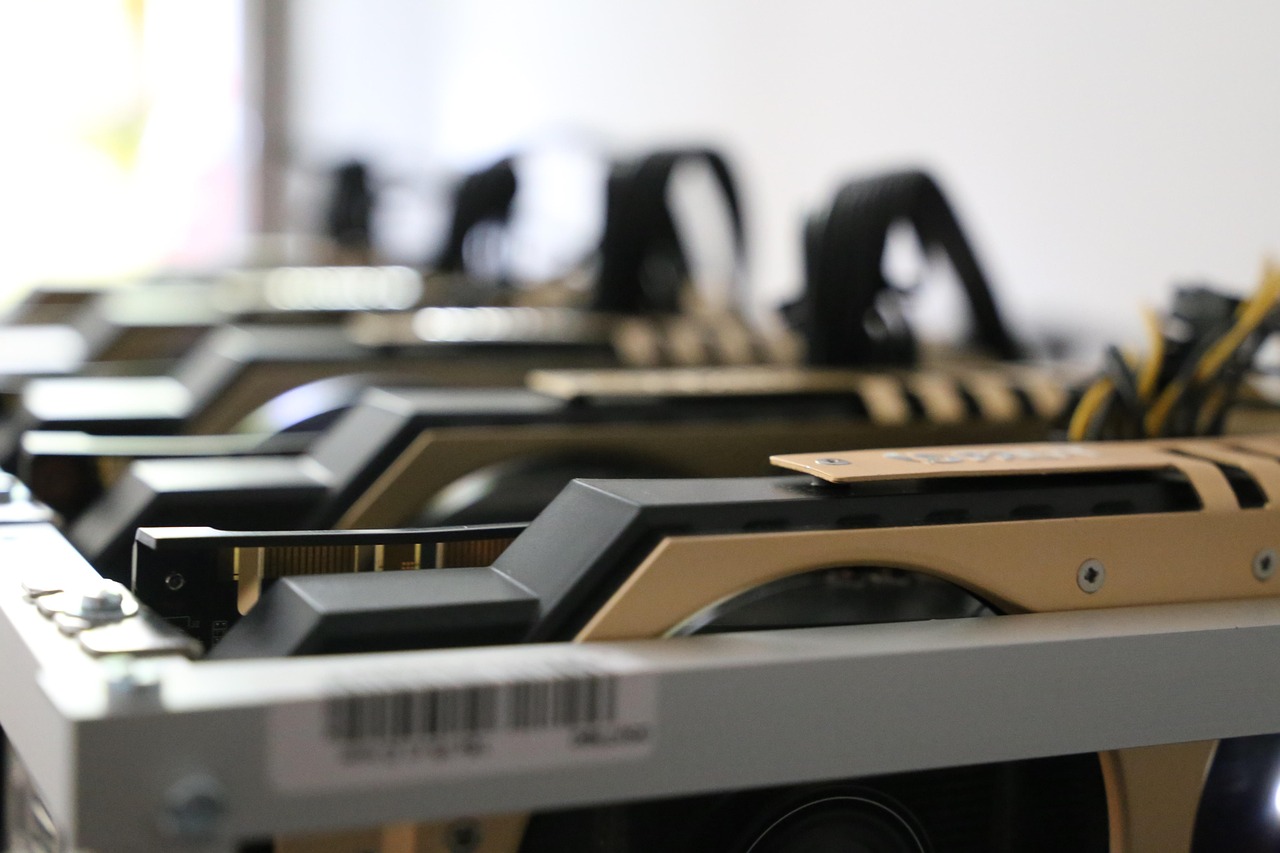
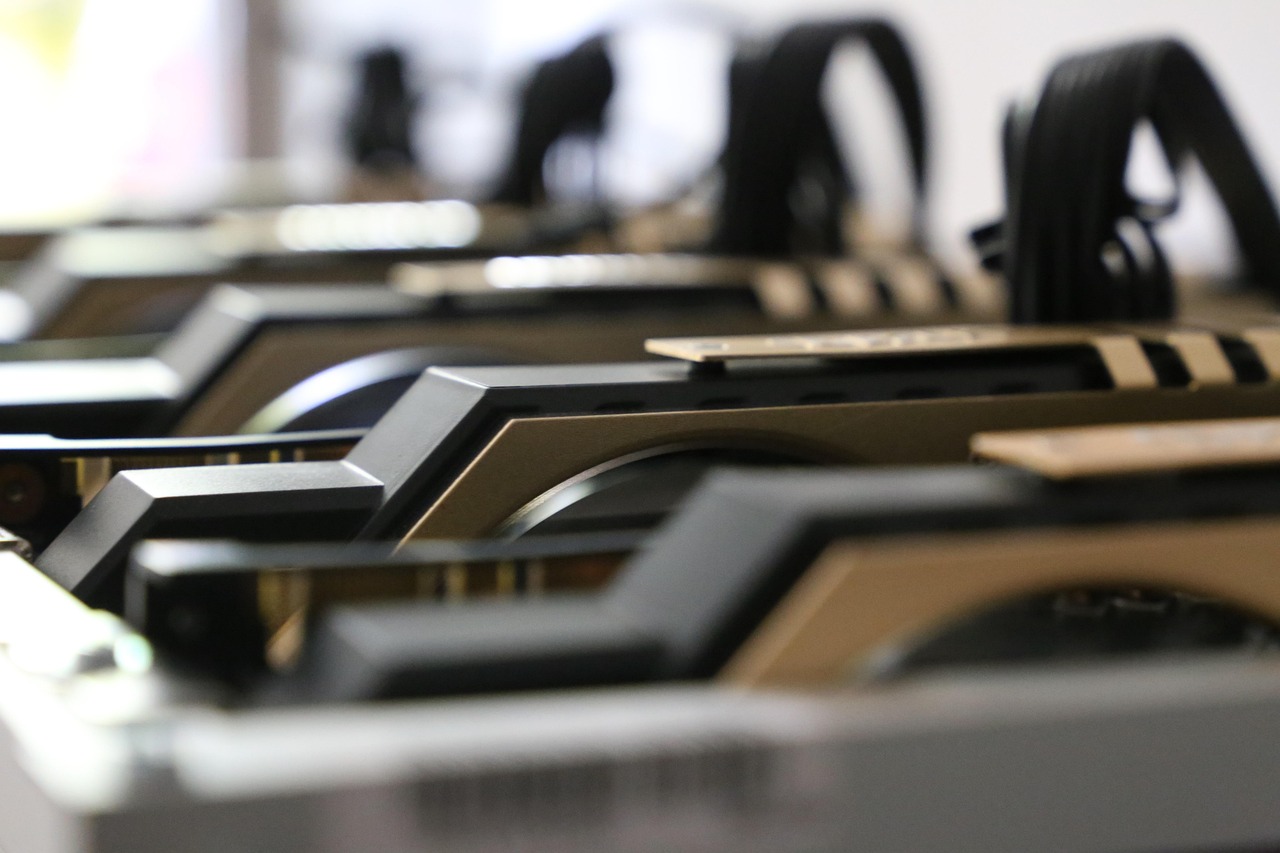
GPU mining rigs let you mine a wide range of coins by switching algorithms with software, which is valuable when coin prices and network difficulty shift. A paid GPU rig consists of multiple graphics cards mounted on a frame, with a reliable power supply, riser cables, and cooling. These rigs are more flexible than ASICs and can mine coins like Ethereum Classic, Ravencoin, or Kaspa efficiently if the hardware is chosen carefully. The downside is that GPUs wear faster under constant mining loads and require more power per unit of hashrate than ASICs, which raises electricity costs.
Buying a GPU rig means choosing cards optimized for mining—models with high memory bandwidth and power efficiency, often sold as mining editions. You also need to plan for power delivery and cooling, because a six-GPU rig can draw several kilowatts. Many miners start with two or four cards to test profitability before scaling up. Paid GPU rigs are ideal for miners who want flexibility, access to multiple coins, and lower entry cost than ASICs, but they demand more maintenance and tuning than turnkey solutions.








Real results from MEFAI's AI. Get $50 off the Pro plan.
Sponsored · Past performance is not indicative of future results. Not financial advice.

Turnkey mining systems: paid convenience that saves time
Turnkey mining systems bundle hardware, software, and sometimes hosting into a single package. These systems are designed for users who want to plug in and start mining without building rigs or configuring ASICs themselves. They often include pre-configured firmware, remote monitoring, and sometimes power management to maximize efficiency. Turnkey solutions are popular with newcomers and investors who prefer convenience over hands-on setup, and they can be a good choice for small-scale mining in regions with cheap electricity.
The trade-off is cost and customization. Turnkey systems usually cost more per unit of hashrate than building your own rig, and they may lock you into specific coins or hosting providers. Some providers also charge monthly fees for software or cloud management, which can erode profits if electricity or coin prices fluctuate. Still, for miners who value reliability and support, a turnkey system can be worth the premium, especially if downtime means lost earnings. They are less flexible than DIY rigs but far easier to deploy and maintain.
Hosting and colocation: paying for space and power management
Hosting services let you rent rack space, power, and cooling for your mining hardware in a facility designed for high-density mining. This option is attractive if your home electricity is expensive or your space lacks proper ventilation and power delivery. By paying for hosting, you offload infrastructure concerns—power quality, cooling, security, and maintenance—so you can focus on hardware performance and coin selection. Hosting providers often offer tiered pricing based on power draw, which makes scaling predictable.
The main drawback is cost: hosting fees add to your operational expenses and can exceed the electricity savings if the provider’s rates are high. Some hosting companies also take a cut of mining proceeds or require you to use their firmware or pool, which limits control. Still, for miners with high-power rigs or ASICs, professional hosting can be the difference between profit and loss, especially in hot climates where home cooling is expensive. It’s one of the clearest examples of what paid infrastructure adds beyond the hardware itself.
Power supplies and cooling: where paid upgrades deliver real gains
Efficient power supplies and advanced cooling are often overlooked but critical components that separate profitable miners from money-losers. A high-quality 80 Plus Platinum or Titanium PSU converts wall power to mining power with less waste, directly lowering your electricity bill. Cheap PSUs waste energy as heat and can fail under continuous load, which means downtime and lost revenue. Similarly, better cooling—whether custom heatsinks, immersion tanks, or improved case airflow—lets you run hardware at higher clocks without throttling, which boosts hashrate without increasing power draw proportionally.
Paid upgrades in power and cooling are usually worth the investment because they affect every watt you consume. For GPU rigs, undervolting and optimizing fan curves can cut power use by 10–20% without reducing hashrate, a direct boost to profitability. For ASICs, immersion cooling can reduce noise and heat while improving stability, which is valuable in hosted environments where space and cooling are constrained. If you are scaling beyond a single machine, investing in efficient power delivery and thermal management pays off faster than chasing raw hashrate.
How to decide: a practical checklist for your mining budget
Start by calculating your effective electricity cost in kilowatt-hours and compare it to current coin profitability on a mining calculator. If your power is expensive or unstable, free hardware or small GPU rigs may not cover costs, making paid ASICs or hosting more viable. Next, decide whether flexibility or efficiency matters more: if you want to switch coins often, a paid GPU rig or turnkey system is better; if you target Bitcoin or similar coins, an ASIC is likely necessary.
Consider your time and skill: free setups require no cash but demand patience and troubleshooting, while paid hardware and hosting reduce hands-on work but require upfront capital. Finally, factor in resale value—ASICs and mining GPUs can lose value quickly, so aim for reputable brands with good warranties. If your numbers show thin margins, start small with a paid rig or a hosted unit rather than risking free hardware on expensive power. The right choice balances hardware cost, electricity, coin selection, and your willingness to manage the operation.
Bottom line: where to spend and where to save
Free mining hardware is a low-risk way to learn and experiment, but it rarely scales profitably beyond small coins and cheap electricity. Paid hardware—whether GPUs, ASICs, or turnkey systems—delivers the efficiency and reliability needed for serious mining, especially when electricity costs are moderate. Invest in high-quality power supplies, efficient cooling, and reputable brands to protect uptime and profitability. If your budget allows, hosting or colocation can further stabilize operations by offloading infrastructure concerns. Ultimately, the decision comes down to your power costs, coin targets, and how much time you can dedicate to setup and maintenance. Choose wisely, measure often, and scale only when the numbers justify the spend.
More in Hardware & Gadgets

Prime Day’s Hidden Hardware Deals: What Tech Buyers Should Know
Prime Day drops prices on CPUs, GPUs, laptops and accessories — but not all discounts are equal. Here’s how to spot real savings and avoid gimmicks.

The 2026 Tech IPO Wave: What SpaceX, Anthropic and OpenAI Mean for Investors and the Market
Three high-profile tech companies—SpaceX, Anthropic and OpenAI—are preparing IPOs in 2026, reshaping public markets and testing investor appetite for AI and space hardware.
Nvidia’s Vera CPUs Head to China as GPU Sales Remain Constrained
Nvidia has told Chinese customers Vera CPUs could ship as early as August, offering an alternative as GPU sales remain frozen under export rules.