
How AI Coding Assistants Could Turbocharge Crypto Hacks — And Why DeFi Is Most at Risk
By Mag-Info Tech editorial · 2026-06-14
A new artificial intelligence model has arrived that can write and analyze code faster and more deeply than most human developers. While designed to assist with software development, its capabilities raise immediate concerns in crypto, where security failures have already cost decentralized finance (DeFi) platforms more than $840 million this year. The model, Anthropic’s Claude Fable 5, combines stronger reasoning with advanced coding assistance and is positioned as a general-purpose tool for building and debugging applications. But security researchers warn that such tools won’t create fundamentally new hacking techniques — they will instead accelerate the discovery and exploitation of existing weaknesses in crypto systems.
This isn’t a theoretical risk. DeFi protocols have repeatedly been compromised through misconfigurations, exposed private keys, flawed signing flows, and human operational errors — not just flawed smart contracts. With AI now able to scan thousands of lines of code per second, analyze complex protocols, and even simulate attack paths, the barrier to executing a high-value crypto hack is dropping rapidly. The question is no longer whether AI will be used in crypto attacks, but how soon, and which platforms will be caught unprepared.
The Arrival of a New Kind of Coding Assistant
Claude Fable 5 marks a shift in AI-assisted development by integrating advanced reasoning with real-time code generation and analysis. Unlike earlier models that focused primarily on text or basic code completion, this system is engineered to understand and manipulate code at scale, including complex logic flows, integration patterns, and security-sensitive operations. Anthropic has positioned it as a tool for developers who need to build, audit, and deploy software more efficiently. But in crypto — where code is money and mistakes are irreversible — efficiency cuts both ways.
The model’s public release is accompanied by a more restricted variant, Mythos 5, reserved for vetted security professionals. This dual-track approach reflects a recognition that powerful coding tools can be misused. Yet even restricted versions may eventually leak into broader ecosystems. The core issue isn’t the model itself, but the environment in which it operates: a crypto space where protocols are often deployed rapidly, audited lightly, and managed by teams with limited operational security experience.
Why DeFi Is a Prime Target for AI-Augmented Attacks
DeFi platforms have become the most visible victims of crypto-related breaches, not because their smart contracts are uniquely vulnerable, but because they combine high-value assets with complex, interconnected systems that are hard to secure end-to-end. This year’s losses, exceeding $840 million, have overwhelmingly stemmed from operational failures — leaked keys, improper access controls, flawed transaction signing, and social engineering — rather than code-level bugs in smart contracts.
AI tools like Claude Fable 5 excel at finding such weaknesses. They can parse configuration files, simulate transaction flows, reverse-engineer signing logic, and even probe human-facing attack surfaces like admin dashboards or multisig setups. A developer using such a tool might inadvertently expose a private key in a log, or an attacker could use it to reverse-engineer a protocol’s operational flow and identify a single point of failure. In DeFi, where liquidity pools and governance tokens are worth hundreds of millions, even a small misconfiguration can lead to catastrophic losses.

Moreover, AI can automate the reconnaissance phase of an attack. Instead of manually reviewing hundreds of smart contracts or protocol configurations, an attacker can deploy an AI agent to scan entire ecosystems, identify patterns of vulnerability, and prioritize targets based on potential yield. This reduces the time from initial reconnaissance to exploit execution from weeks to hours — or even minutes.
The Limits of AI in Hacking — And Where It Excels
Security experts emphasize that AI won’t invent fundamentally new types of crypto attacks. The underlying vulnerabilities — reentrancy, front-running, oracle manipulation, key leakage — have been known for years. What AI changes is the speed and scale of exploitation. It can chain together multiple small weaknesses into a coherent attack path, simulate edge cases in signing logic, or generate phishing messages tailored to specific teams based on publicly available data.
For example, an AI could analyze a DeFi protocol’s transaction logs, detect a pattern in admin key usage, and craft a message that mimics a legitimate governance proposal to trick a multisig signer. Or it could reverse-engineer a complex upgrade mechanism and simulate a malicious proposal that drains funds. These aren’t new attack vectors — but they are attacks that previously required deep manual analysis and insider knowledge. AI lowers that barrier.
The flip side is that AI can also be used defensively. Security teams are already using AI to monitor on-chain activity, detect anomalous transaction patterns, and simulate attack scenarios before deployment. But defense requires continuous monitoring, real-time alerting, and rapid response — capabilities that many DeFi teams lack due to resource constraints or immature tooling.
The Human Factor: Operational Security in the AI Era
Even the most advanced AI cannot fix poor operational security. In crypto, the weakest link is often not the code, but the people and processes around it. Private keys stored in insecure environments, admins using personal devices for governance votes, or teams failing to rotate credentials after a breach — these are the kinds of failures that AI can both expose and exploit.
AI tools can automate the discovery of such weaknesses. For instance, they can scan GitHub repositories for accidentally committed private keys, analyze cloud storage buckets for misconfigurations, or simulate social engineering attacks against team members. The risk is compounded when developers use AI assistants to write deployment scripts or configure infrastructure, potentially embedding vulnerabilities that go unnoticed until it’s too late.
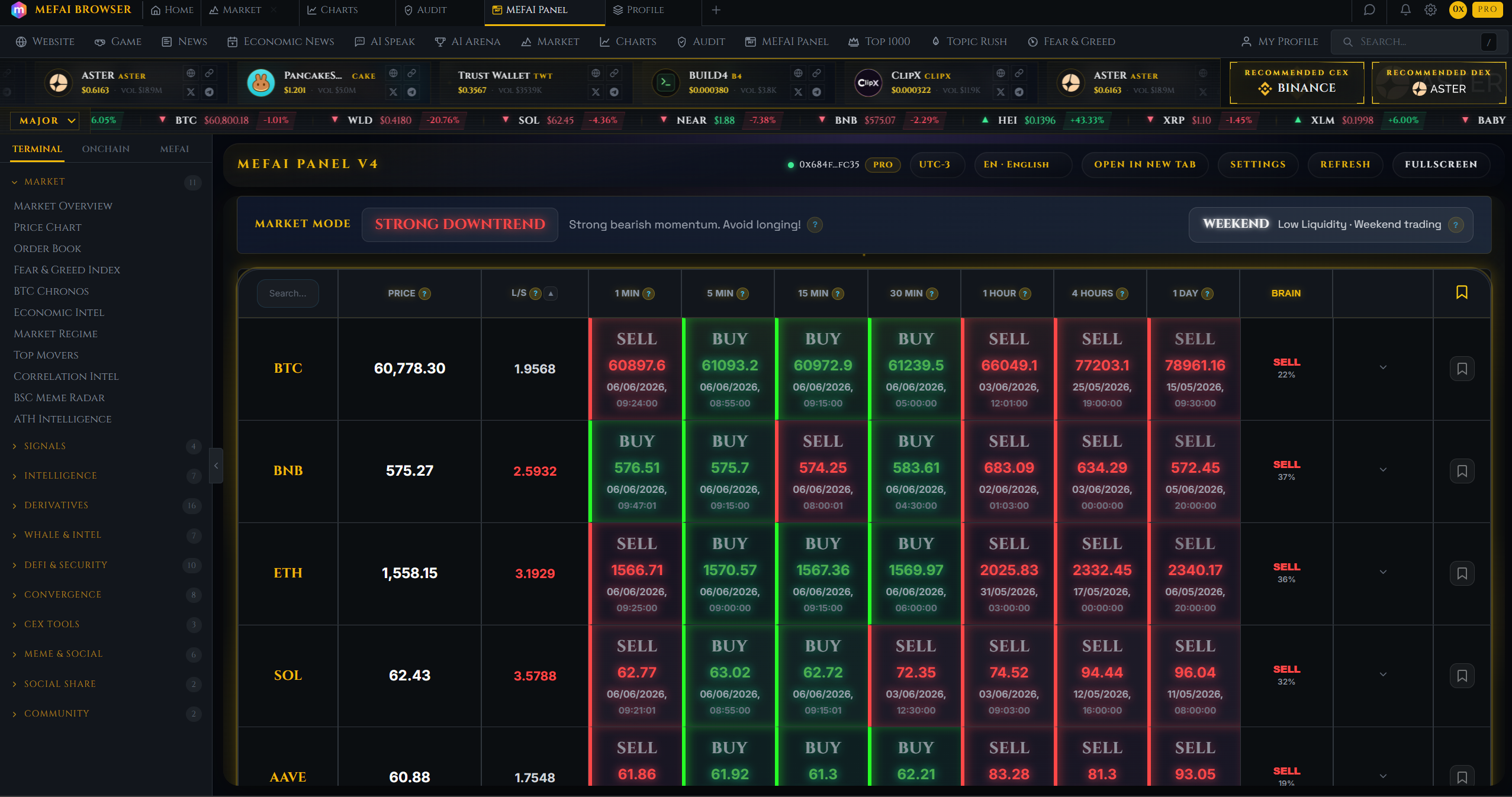



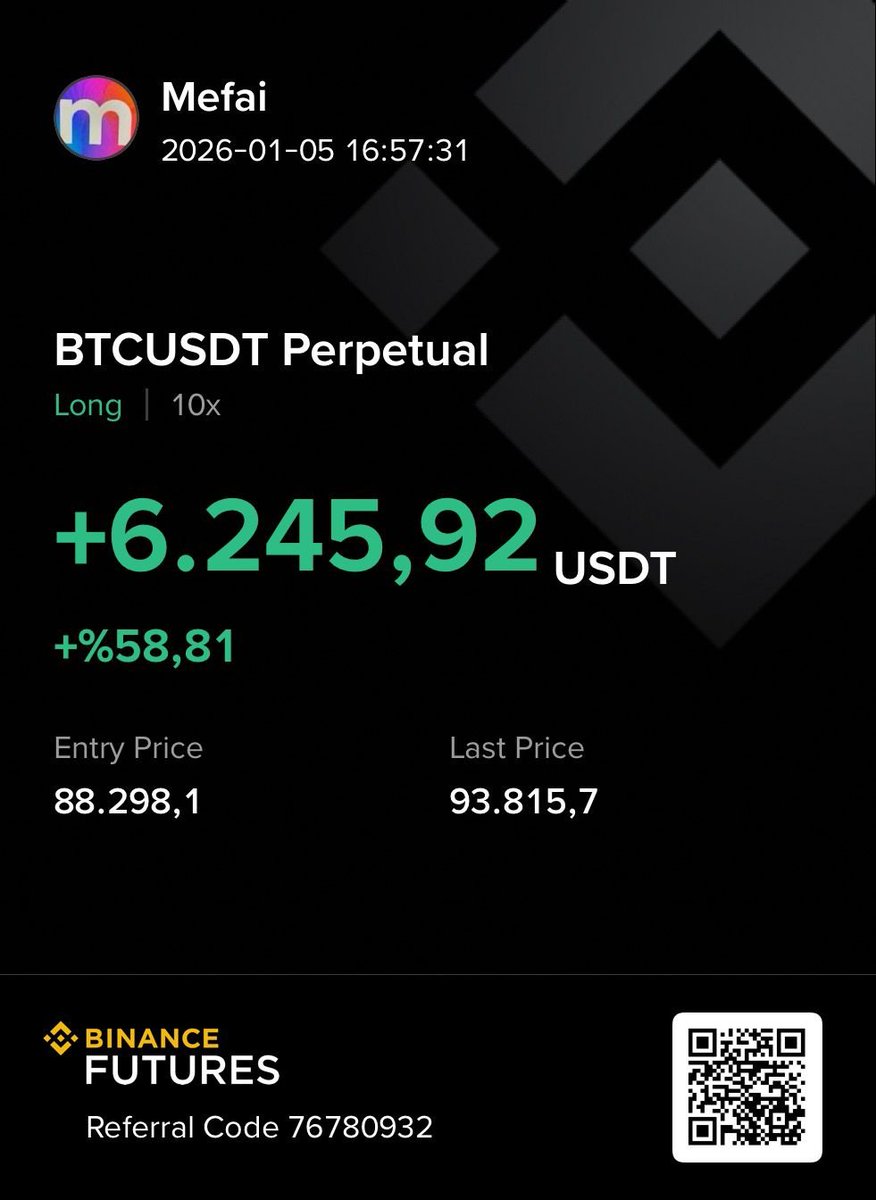

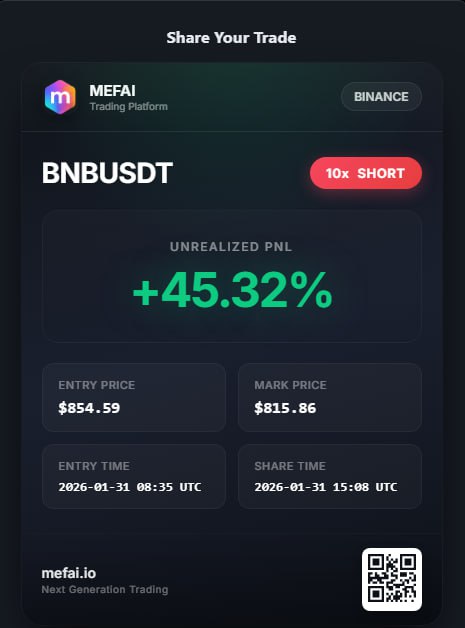
Real results from MEFAI's AI. Get $50 off the Pro plan.
Sponsored · Past performance is not indicative of future results. Not financial advice.


This creates a paradox: the same tools that help teams build faster can also help attackers move faster. The result is a security arms race where both sides leverage AI, but where the attackers — often anonymous and highly motivated — may have fewer constraints than defenders operating under regulatory scrutiny and public accountability.
What This Means for Crypto Projects and Investors
For DeFi projects, the message is clear: AI won’t wait for audits or best practices to mature. Teams that rely on manual code reviews, outdated security checklists, or informal operational processes are increasingly vulnerable. The bar for security must rise in parallel with AI capabilities. That means adopting automated security scanning, formal verification where possible, real-time monitoring, and strict access controls — especially for admin functions.
Investors and users should treat protocols that haven’t updated their security posture with skepticism. A project that hasn’t integrated automated vulnerability scanning, key management best practices, or anomaly detection is not just technically outdated — it’s a high-value target. Look for transparency around security practices, regular third-party audits, and evidence of continuous monitoring. If a protocol’s documentation or team communication hasn’t evolved to address AI-driven threats, it’s likely already behind.
For developers, the arrival of models like Claude Fable 5 is both an opportunity and a responsibility. AI can help catch bugs early, simulate edge cases, and improve code quality — but it can also introduce new risks if used carelessly. Teams should treat AI-generated code as untrusted until manually verified, especially in security-critical components like access controls, tokenomics logic, or upgrade mechanisms.
The Regulatory and Compliance Gap
Crypto remains largely unregulated when it comes to AI-assisted security risks. While financial institutions face strict oversight for operational risk and cybersecurity, DeFi platforms often operate in a legal gray zone. This creates a dangerous incentive structure: teams can deploy rapidly and avoid compliance costs, but at the cost of exposing users to preventable losses.
Regulators are beginning to take notice, but progress is slow. In the meantime, industry-led initiatives — such as bug bounty programs, security certifications, and shared threat intelligence — are the best available tools. Projects that participate in these programs signal a commitment to security that goes beyond marketing. Those that ignore them do so at their peril — and their users’.

What to Watch Next
Over the next 12–18 months, expect to see AI-assisted attacks become more common, more sophisticated, and harder to trace. Attackers will increasingly use AI to obfuscate their activities, generate realistic transaction narratives, and evade detection by blending in with normal protocol activity. Defenders will respond with AI-driven monitoring and anomaly detection, but the gap between offense and defense will likely widen before it narrows.
Pay attention to how major DeFi protocols respond. Are they integrating AI tools into their security workflows? Are they publishing incident reports with root-cause analysis? Are they rotating keys and upgrading infrastructure proactively? These are early indicators of whether a project is serious about security in the AI era.
Also watch for the evolution of AI safety filters. Models like Claude Fable 5 include guardrails designed to block dangerous uses, but these filters are not foolproof. As attackers develop workarounds — through prompt engineering, indirect tool usage, or social manipulation — the effectiveness of these safeguards will be tested. The industry’s ability to adapt these filters in real time will determine how quickly AI-driven exploits become mainstream.
Finally, monitor the intersection of AI and crypto infrastructure. Projects that provide automated security scanning, key management, or real-time threat intelligence are poised to become essential services. Teams that adopt these tools early will not only reduce their risk but also gain a competitive edge in user trust and regulatory readiness.
A Warning and a Call to Action
The arrival of advanced AI coding assistants like Claude Fable 5 is a turning point for crypto security. It won’t create new hacking techniques, but it will democratize the ability to find and exploit existing ones at unprecedented speed. DeFi, already reeling from over $840 million in losses this year, is particularly exposed because its security challenges are as much operational as technical.
The solution isn’t to fear AI — it’s to master it. Projects must integrate AI into their security practices, not just their development workflows. Investors must demand higher security standards. Users must educate themselves on the risks. And the industry must close the gap between technological capability and operational maturity before the next billion-dollar hacker arrives — not with a human, but with a machine.
More in Crypto & Trading

SpaceX’s IPO and Its $1.3 Billion Bitcoin Reserve: What It Means for Corporate Crypto Adoption
SpaceX’s Nasdaq debut brings the largest corporate bitcoin reserve ever attached to an IPO, testing whether treasury allocations can survive earnings volatility and reshape how big tech views crypto.

Stablecoins Are Digital Cash, Not Capital — And That’s the Problem
Stablecoins have scaled to $315 billion but mostly sit idle, failing to generate yield or support real economic activity, leaving crypto’s monetary primitive underutilized.

Bitcoin’s $63,000 Rebound: What the Week’s Swings Mean for Traders and Long-Term Holders
Bitcoin swung from $73,000 to under $60,000 then recovered to $63,500. We explain why the dip happened, what the 32-BTC sale from Strategy means, and what to watch next.