
Why ‘Garbage In, Garbage Out’ Still Rules AI Content – and What That Means for Everyone
By Mag-Info Tech editorial · 2026-06-28

AI tools are now everywhere—from marketing copy to academic writing—promising speed and scale. But as novelist Margaret Atwood recently pointed out, when artificial intelligence produces unreliable or biased output, the root cause is often the same principle that has governed computing for decades: garbage in, garbage out. Her observation wasn’t aimed at AI itself, but at the quality and ethics of the data used to train these systems. It’s a reminder that no matter how sophisticated the model, flawed inputs lead to flawed outputs. This principle applies not only to creative writing tools but to enterprise software, legal research platforms, and even educational resources. Understanding why this happens—and how to mitigate it—is essential for anyone using AI today.
How AI Learns: The Hidden Dependence on Human-Created Data
Large language models are trained on vast datasets scraped from books, articles, code repositories, and websites. These sources contain not just facts, but also errors, stereotypes, outdated information, and deliberate misinformation. When a model like a chatbot or writing assistant is asked to generate content, it doesn’t “know” what’s true—it predicts the most likely sequence of words based on patterns in that data. If a training set includes outdated medical advice, biased hiring language, or conspiracy theories, the model will reproduce those patterns when prompted. This isn’t a bug in the software; it’s a structural issue baked into the data pipeline.
The problem is compounded by the fact that many high-profile AI systems are trained on publicly available internet content, much of which was never intended for machine learning use. Websites, blogs, and forums often contain typos, sarcasm, slang, and regional dialects that models struggle to interpret correctly. Even curated datasets like Wikipedia or academic papers can carry biases—gender, racial, or cultural—that then get amplified in AI responses. For example, a model trained heavily on 19th-century literature may overgeneralize about gender roles, while one trained on modern social media might normalize informal or harmful language. The result isn’t just stylistic inconsistency—it’s factual unreliability and potential harm.
Creators, Coders, and Companies: Who Is Responsible for the “Garbage”?
The responsibility for poor AI output is often diffused across multiple stakeholders. Data providers—publishers, journalists, researchers—may not realize their content is being used to train models. Platforms hosting AI services rarely disclose the full provenance of their training data, making it hard for users to assess risk. And end users, from students to executives, may assume that AI-generated text is accurate simply because it’s polished and fluent. This creates a dangerous feedback loop: flawed outputs get recycled into new training data, further degrading future models.
Atwood’s own experience—trying a popular AI writing tool once and finding it unconvincing—highlights a deeper truth: AI excels at mimicry, not mastery. It can imitate the tone of a 19th-century novel or mimic a technical manual, but it cannot inherently distinguish between truth and fiction unless explicitly guided. This is why many organizations now implement human-in-the-loop workflows, where AI drafts are reviewed before publication or deployment. In fields like healthcare or law, such oversight isn’t optional—it’s required by professional standards. Yet even in creative industries, where style matters more than strict accuracy, unchecked AI output can mislead audiences or dilute brand voice.
The Ripple Effects: Misinformation, Bias, and Erosion of Trust
When AI systems regurgitate outdated, biased, or false information, the consequences extend beyond embarrassment. In education, students using AI for essays risk learning incorrect facts. In business, marketing teams deploying AI-generated content may accidentally spread misinformation about products or regulations. In public discourse, AI chatbots that echo conspiracy theories or political propaganda can deepen societal divisions. Even seemingly harmless errors—like a model citing a non-existent scientific study—can erode trust in AI tools over time.
The issue is especially acute in low-resource languages or specialized domains. Many AI models are trained predominantly on English-language content, leaving other languages underrepresented. This leads to poor performance in non-English contexts, where models may hallucinate translations or omit key cultural nuances. Similarly, niche fields like astrophysics or medieval history often lack sufficient training data, forcing models to rely on approximations that can mislead researchers. Without deliberate curation and supplementation, AI becomes a blunt instrument—powerful in familiar territory, but dangerously unreliable elsewhere.
What Users Can Do Today: Practical Steps to Reduce Risk
For individuals and organizations using AI tools, the first step is to treat AI outputs as drafts, not final products. Always verify key facts using trusted sources, especially when generating content for public consumption. Use tools that allow fine-tuning or prompt engineering to steer outputs toward accuracy—for example, specifying “cite peer-reviewed sources” or “use only data from 2023 onward.” Many platforms now offer citation features or confidence scores that indicate how likely an answer is to be correct.
Another practical measure is to diversify input sources. If an AI tool is used for legal research, supplement it with official court documents. If it’s used for medical writing, cross-check against peer-reviewed journals. For creative work, use AI as a brainstorming aid rather than a final author. Many professionals are adopting a “red teaming” approach—actively testing AI outputs for bias, errors, and ethical issues before deployment. This isn’t about rejecting AI, but about integrating it responsibly into existing workflows.








Real results from MEFAI's AI. Get $50 off the Pro plan.
Sponsored · Past performance is not indicative of future results. Not financial advice.


The Role of Platforms: Can AI Providers Fix the Data Problem?
AI providers are beginning to address data quality through better curation, watermarking, and transparency. Some are filtering training data to remove known misinformation sources, while others are partnering with domain experts to annotate high-quality datasets. A few platforms now allow users to upload custom datasets or specify preferred sources, giving organizations more control over what the model learns. These are promising developments, but they come with trade-offs: curated datasets are expensive to build and maintain, and transparency initiatives often face resistance from data owners concerned about copyright or competitive advantage.
Regulatory pressure is also pushing change. New AI laws in the European Union and proposed rules in other jurisdictions require providers to document data sources and assess risks. This could lead to standardized data labels—similar to nutrition facts—that help users evaluate the reliability of an AI model before using it. Over time, such measures may reduce the spread of “garbage” in training data, but they won’t eliminate it entirely. The internet remains a vast, messy archive, and AI models will continue to ingest both wisdom and nonsense.
Beyond Text: How GIGO Affects Code, Design, and Cybersecurity
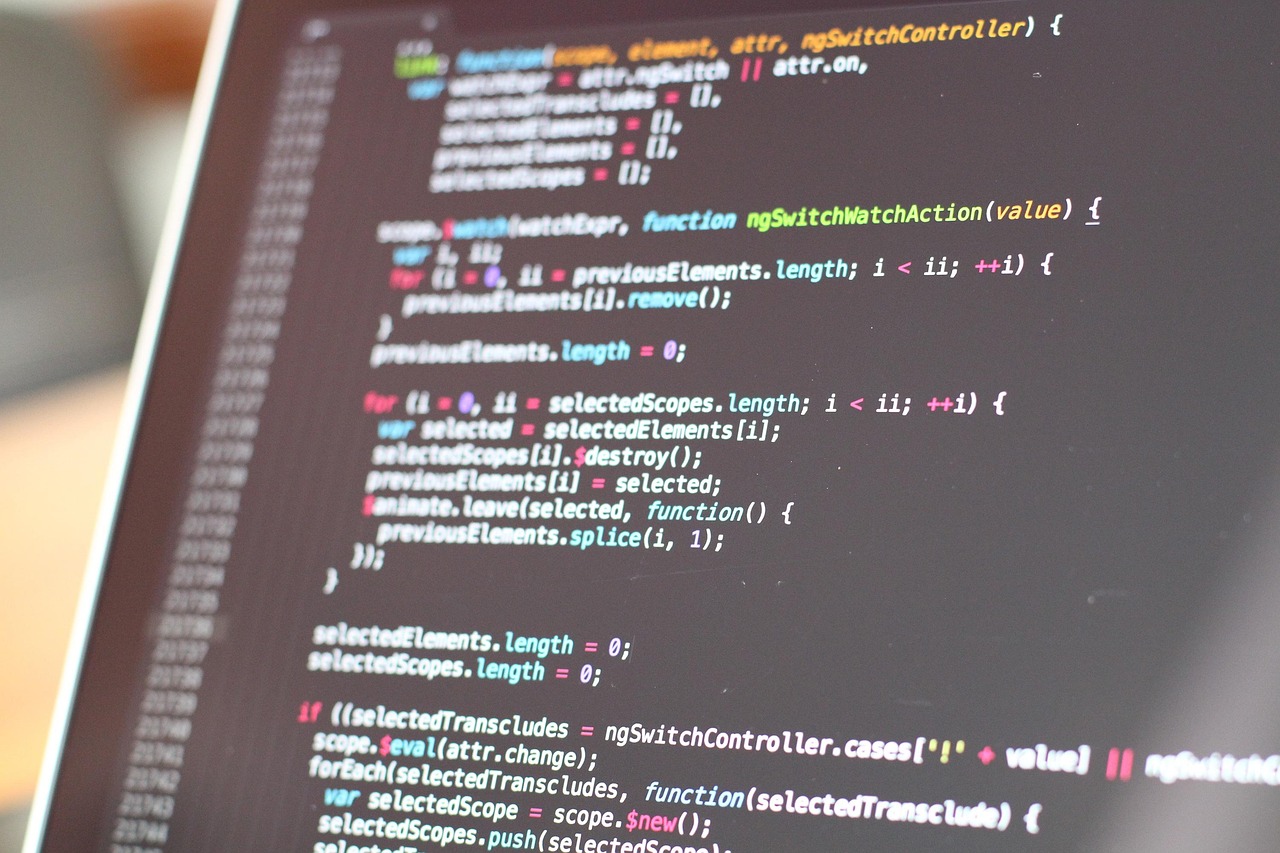
The garbage in, garbage out principle isn’t limited to written language. AI-powered coding assistants, for instance, often suggest code snippets based on repositories that contain deprecated functions, insecure practices, or even malicious code. Developers who blindly accept AI-generated suggestions risk introducing vulnerabilities into their applications. Security researchers have already found instances where AI coding tools recommended code with hardcoded passwords or SQL injection flaws—mistakes that could lead to real-world breaches.
Similarly, AI tools used in graphic design or UX prototyping may generate layouts or color schemes based on biased or outdated design trends. If a model trained on 1990s web aesthetics is used to design a modern app, the result could be visually unappealing or functionally flawed. In cybersecurity, AI systems trained on historical attack patterns may struggle to detect novel threats if those threats weren’t represented in the training data. The lesson is clear: AI amplifies the quality of its inputs across every domain, from software to visual design to security.

The Long View: Can AI Ever Escape GIGO?
The dream of fully autonomous, error-free AI remains distant. While models are becoming more efficient at learning from smaller datasets and adapting to new information, they still rely on human-curated knowledge as their foundation. Some researchers are exploring synthetic data generation—using AI to create training examples—but this risks compounding errors if the synthetic data itself is flawed. Others are turning to retrieval-augmented generation (RAG), where models pull real-time, verified information from trusted databases before generating responses. RAG can significantly improve accuracy, but it requires robust, up-to-date knowledge sources.
Ultimately, the path forward involves a shift in mindset: from treating AI as a black box that produces ready-made answers, to viewing it as a collaborative tool that augments human judgment. This means investing in data literacy—understanding where data comes from, how it’s processed, and what its limitations are. It also means prioritizing transparency, so users can see not just the output, but the reasoning behind it. Until then, the old computing adage will remain true: no matter how advanced the algorithm, the quality of the output can never exceed the quality of the input.
What to Watch Next: Trends and Tools for Better AI Outputs
Over the next year, watch for three key developments. First, more platforms will integrate real-time fact-checking and source citation into AI responses, making it easier to verify claims. Second, we’ll likely see increased use of domain-specific AI models—trained on curated, proprietary data—for fields like medicine, law, and finance, where accuracy is critical. Third, regulators may begin requiring AI providers to disclose data sources and bias assessment results, giving users more information to make informed decisions.
For users, the takeaway is simple: don’t trust AI blindly. Always ask, “Where did this come from?” and “Who verified it?” Whether you’re a writer, developer, researcher, or executive, your role isn’t just to use AI—it’s to guide it, correct it, and ultimately, improve the inputs so the outputs become more reliable. The technology is powerful, but its value depends entirely on the quality of the data—and the people—behind it.
More in Software & SaaS

Why Kai Wright’s Phone Refusal Matters for Tech Consumption
A prominent journalist’s decision to keep using an aging smartphone spotlights the real-world limits of planned obsolescence and the growing cost of constant upgrades.

Teenage Engineering KO II OS 2.5: What the sampler update means for producers and performers
Teenage Engineering’s free OS 2.5 update turns the $329 KO II sampler into a more flexible USB audio interface with lo-fi modes, reverse playback, an arpeggiator and longer samples—changing how solo c

Apple Seeks Exception to Buy RAM from Blacklisted Chinese Supplier Amid Global Memory Shortage
Apple has asked U.S. regulators for permission to source memory chips from a blacklisted Chinese manufacturer, highlighting the strain of the global RAM shortage on tech supply chains and the challeng