
Can Amazon’s AI Chips Break Nvidia’s Dominance?
By Mag-Info Tech editorial · 2026-06-19

Amazon Web Services is moving to sell its internally developed AI chips to third-party data centers, a step that could significantly expand its competition with Nvidia and reshape the AI infrastructure landscape. The company’s Trainium chips, designed for high-performance machine learning workloads, have already proven so popular within AWS that capacity sells out almost immediately after becoming available. Now, AWS appears ready to offer those chips beyond its own cloud, potentially unlocking a new revenue stream estimated at around $50 billion annually if sold both internally and externally.
This shift is not just about revenue—it’s a strategic push to diversify the AI chip supply chain and reduce reliance on a single vendor. For years, Nvidia has dominated the AI accelerator market, supplying GPUs that power most of the world’s large language models and generative AI systems. By opening Trainium to other data centers, Amazon is positioning itself as a credible alternative, one that could help break Nvidia’s near-monopoly in high-end AI computing. But the move comes with risks: it may force AWS to balance supply between its own cloud customers and external buyers, especially as demand continues to surge across the industry.
The Rise of AWS’s Homegrown AI Chips
Amazon began developing its own AI chips years ago to reduce costs and improve performance within its massive cloud infrastructure. The result was Trainium, a custom accelerator optimized for training deep learning models, and Inferentia, designed for inference tasks. These chips were built to run more efficiently than general-purpose GPUs in AWS data centers, offering better price-performance for machine learning workloads.
Initially, AWS used these chips only for its own cloud services, allowing customers to rent access to Trainium-powered instances without needing to manage hardware. The strategy worked: demand quickly outstripped supply. In early 2026, AWS disclosed that Trainium capacity was selling out almost instantly, and even Trainium4—still months from general availability—had already reached full allocation. This unprecedented demand signaled not just strong adoption, but a potential bottleneck in AI infrastructure that AWS alone couldn’t solve.
The company’s decision to expand beyond internal use reflects a broader industry frustration with Nvidia’s dominance. While Nvidia’s GPUs remain the gold standard for AI training, their high cost and limited availability have created bottlenecks for companies building large-scale models. AWS’s move suggests it sees an opportunity to offer a competitive alternative—one that integrates seamlessly with its cloud ecosystem and could be adopted by other cloud providers, hyperscale data centers, or even enterprise AI labs running private infrastructure.
Why Selling Chips Matters: Beyond Cloud Revenue
For AWS, revenue from AI chips isn’t just about selling silicon. Historically, the company has bundled chip access with broader cloud services—storage, networking, security, and AI platform tools—creating a flywheel where chip demand drives higher cloud usage. But this model also means AWS earns more when customers stay within its ecosystem.
Selling Trainium chips directly to third parties changes that dynamic. Instead of relying solely on cloud consumption, AWS could generate standalone hardware revenue, tapping into a market currently dominated by Nvidia, AMD, and Intel. In a 2026 shareholder letter, CEO Andy Jassy estimated that if AWS’s chip business were standalone, its annual run rate could reach approximately $50 billion—roughly the size of Intel’s entire annual revenue. That figure highlights the scale of the opportunity, even if only a fraction of it materializes.

Yet this shift introduces complexity. AWS must decide whether to prioritize its own cloud customers or open capacity to external buyers. If Trainium remains in high demand internally, selling chips externally could mean longer wait times for AWS cloud users—a risk to customer retention. Alternatively, if AWS scales production through partners like TSMC, it could satisfy both markets. But doing so would require competing directly with Nvidia for manufacturing capacity, which is already strained by global AI demand.
The Strategic Challenge to Nvidia’s AI Empire
Nvidia’s leadership in AI chips is built on decades of investment in GPU architecture, a mature software stack (CUDA), and deep integration with AI frameworks like PyTorch and TensorFlow. Its chips power nearly all major AI models today, from research labs to production systems. But that dominance has come at a cost: high prices, long lead times, and limited supply have frustrated many companies trying to scale AI workloads.
AWS’s Trainium offers a potential escape route. While not yet matching Nvidia’s raw performance in all cases, Trainium is designed for efficiency within AWS environments and can be optimized for specific workloads. More importantly, it integrates natively with AWS services, offering a unified experience for training and inference. For companies already using AWS, adopting Trainium could mean lower costs and better performance—without leaving the ecosystem.
The broader implication is a potential fragmentation of the AI chip market. If AWS succeeds in selling Trainium widely, other cloud providers—such as Microsoft Azure or Google Cloud—may accelerate their own chip development and sales efforts. This could lead to a more diversified supply chain, reducing reliance on Nvidia and increasing competition on price, performance, and features. Over time, such competition could drive innovation and lower costs for AI developers across the board.
Manufacturing and Supply Chain Realities
One of the biggest hurdles AWS faces is manufacturing capacity. Trainium chips are produced by TSMC, the world’s leading semiconductor foundry. TSMC is already running near full capacity due to surging demand from AI chipmakers, including Nvidia, AMD, and custom chip startups. Expanding Trainium production to serve external customers would require TSMC to allocate additional wafer starts—something that may not be feasible without displacing other orders.
This creates a strategic dilemma for AWS: does it prioritize its own cloud growth, or does it invest in building a hardware business that competes with its suppliers? Historically, cloud providers have avoided selling chips to competitors because it risks straining relationships with foundries and complicating supply agreements. But with demand for AI infrastructure at an all-time high, AWS may conclude that the long-term benefits of a diversified chip business outweigh the short-term risks.
Another factor is software compatibility. Nvidia’s CUDA ecosystem is deeply embedded in AI development. For Trainium to succeed outside AWS, it will need robust compiler support, optimized libraries, and compatibility with popular AI frameworks. AWS has made progress in this area, but widespread third-party adoption will depend on whether developers can port their models to Trainium with minimal friction.
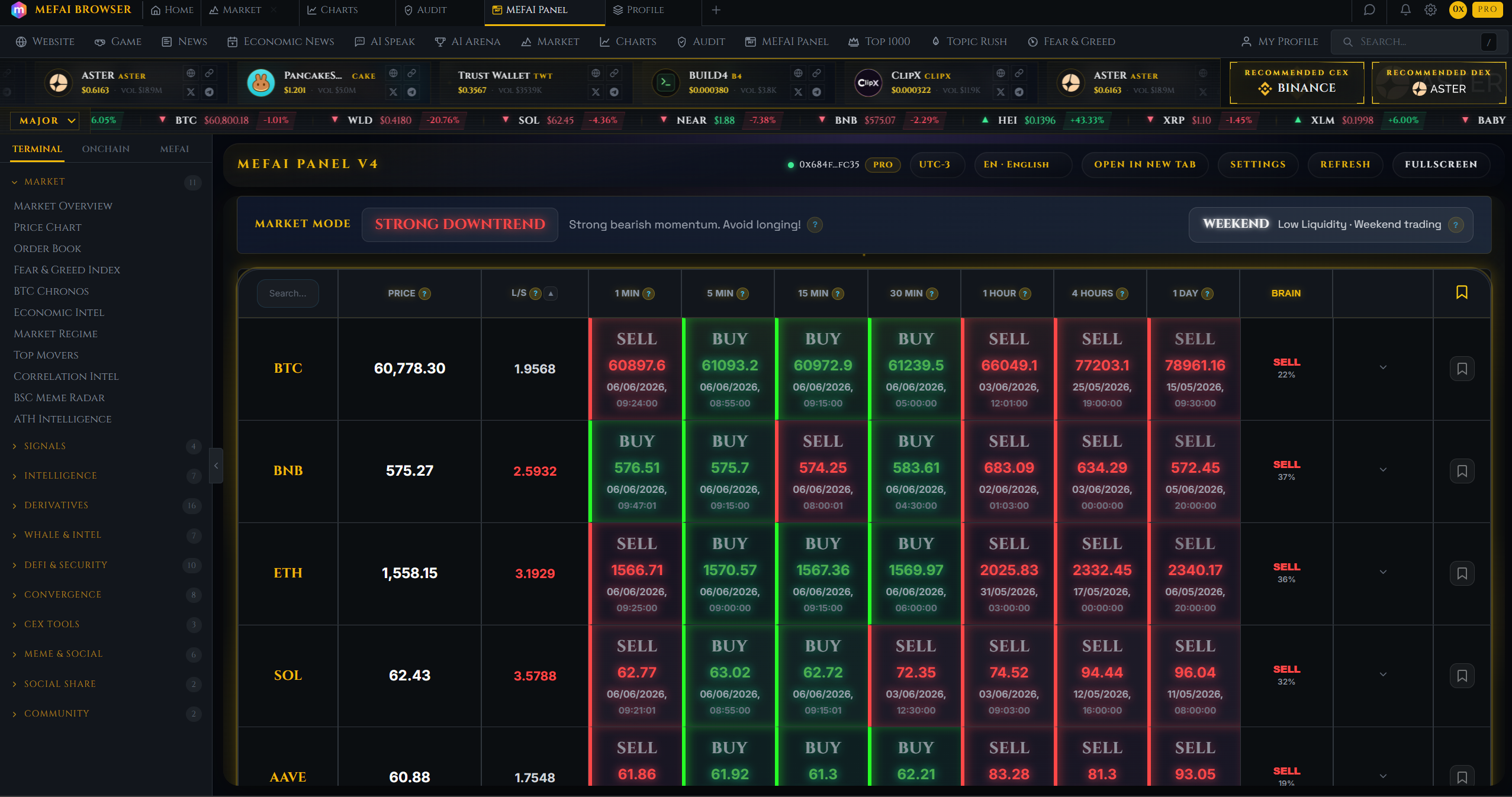

Real results from MEFAI's AI. Get $50 off the Pro plan.
Sponsored · Past performance is not indicative of future results. Not financial advice.


Economic and Competitive Implications
From an economic standpoint, AWS’s chip strategy could redefine how AI infrastructure is priced and delivered. Today, most AI workloads are run on rented GPUs in the cloud, with costs scaling with usage. By selling chips directly, AWS could offer a hybrid model: customers buy or lease hardware while still using AWS services for management, security, and scalability. This could appeal to large enterprises with private data centers or those seeking to reduce cloud egress fees.
Financially, a $50 billion chip business would make AWS a major player in semiconductors—on par with global chip giants. While this revenue would not all come from external sales (some would still be internal), even a fraction represents a significant new income stream. For investors, this diversification reduces reliance on cloud services and signals a maturing of AWS’s business model.
Competitively, the move pressures Nvidia to justify its premium pricing and supply control. If AWS can deliver comparable performance at lower cost or with better availability, it could erode Nvidia’s market share in cloud AI deployments. Nvidia has responded by expanding its own cloud offerings and software ecosystem, but a shift toward open or alternative chip architectures could force the company to adapt.
What’s Next: Timelines, Partnerships, and Watchpoints
The talks about selling Trainium to third parties are still in early stages, according to AWS. No specific buyers have been named, and no formal product announcements have been made. But the fact that such discussions are happening at all suggests AWS is serious about building a hardware business beyond the cloud.
Industry watchers should monitor several key developments:
- Production scale-up: Will AWS secure additional TSMC capacity, or will chip supply remain constrained?
- Software ecosystem growth: Are third-party tools, compilers, and frameworks being developed for Trainium?
- Customer commitments: Are any major cloud providers, AI labs, or enterprises expressing interest in adopting Trainium?
- Pricing models: Will AWS sell chips directly, offer them as part of managed services, or license the design to OEMs?
Another area to watch is AWS’s next-generation chips. Trainium4, expected later in 2026, is already sold out in capacity projections. If this chip delivers significant performance gains, it could accelerate adoption and make AWS’s offering even more competitive.
What This Means for Businesses and Developers
For companies building AI systems, AWS’s move introduces a new option in the AI chip market. Those already using AWS cloud services may find it easier and more cost-effective to adopt Trainium-based instances, especially for large-scale training jobs. The integration with AWS’s AI platform, security, and networking tools could reduce operational overhead and improve performance predictability.
Enterprises with private data centers should evaluate whether purchasing Trainium chips makes sense for their infrastructure. While the upfront cost may be higher than cloud rentals, long-term savings could be significant—especially if AWS offers leasing or financing programs. However, they must also consider the learning curve and potential need to re-architect AI pipelines to run on Trainium.
Developers should monitor compatibility updates and benchmark results. If Trainium proves to be a strong performer in real-world workloads, it could become a preferred platform for certain types of models. Over time, this could lead to a bifurcation in the AI ecosystem: Nvidia for general-purpose training, and AWS (or others) for optimized, cost-efficient workloads.
Conclusion: A Chip War Enters a New Phase
Amazon’s decision to sell its AI chips to third parties marks a turning point in the AI infrastructure landscape. It signals the beginning of a more competitive—and potentially more fragmented—chip market, where cloud providers, hyperscalers, and traditional semiconductor firms all vie for dominance.
While Nvidia remains the undisputed leader in AI accelerators, AWS’s move could chip away at its advantages by offering a credible alternative that integrates tightly with a major cloud platform. The success of this strategy will depend on AWS’s ability to scale production, expand software support, and convince developers and enterprises to adopt Trainium.
For now, the talks are early, the supply is tight, and the competition is fierce. But one thing is clear: the era of a single dominant AI chip vendor is under threat. Businesses and investors should prepare for a more diverse, dynamic—and possibly more affordable—AI infrastructure future.
More in Hardware & Gadgets
Cooler Master NR2 Pro Mini-ITX Packs RTX 5080 Into a Compact Liquid-Cooled Gaming PC
The Cooler Master NR2 Pro bundles a liquid-cooled RTX 5080, Intel Core Ultra 7 265F, 2 TB Gen4 SSD and NR200P Max chassis into a $2,799.99 mini-ITX system that runs 4K titles smoothly.
Corsair’s 14.5-inch Xeneon Edge touchscreen monitor drops to $199.99: what it does and who should buy it
Corsair’s 14.5-inch Xeneon Edge touchscreen monitor is on sale for $199.99, a 20% discount. We explain what it is, how it compares, and who should consider buying it.
iOS 27: AI quietly transforms everyday iPhone tasks beyond Siri
Apple is embedding AI across iOS 27 to handle practical tasks like splitting bills, locking down passwords, and organizing information without requiring users to talk to Siri.