
Why Export Controls on AI Models Like Mythos Will Probably Fail
By Mag-Info Tech editorial · 2026-06-20

For the first time, the U.S. government has applied export controls directly to frontier AI models, ordering Anthropic to block access to its cybersecurity-focused systems Mythos and Fable outside the United States and to foreign nationals inside the country. Within hours, Anthropic suspended both models to comply. The move marks a high-stakes experiment: can Washington contain advanced AI the way it has repeatedly tried—and largely failed—to contain encryption and cybersecurity tools over the past three decades?
The policy lever is familiar. Governments have long sought to restrict the cross-border flow of technology they deem sensitive, from encryption software in the 1990s to intrusion tools today. Yet history shows that export controls consistently underperform when the underlying technology is knowledge-intensive, widely replicable, and commercially valuable. Mythos and Fable are no exception. Their core capabilities—generating code, analyzing vulnerabilities, and simulating attacks—are not physical goods but forms of expertise embedded in software. Once the underlying ideas circulate, control becomes a matter of enforcement rather than prevention.
A Thirty-Year Pattern: Export Controls Rarely Work on Software
Since the early 1990s, U.S. authorities have used export controls to limit the spread of encryption, intrusion software, and cybersecurity tools. The rationale is straightforward: if bad actors cannot obtain the latest defensive or offensive cyber tools, they will struggle to exploit or secure systems effectively. In reality, the controls have repeatedly fallen short.
Encryption offers the clearest example. In the 1990s, the U.S. classified strong encryption as a munition, restricting its export to certain countries. Yet open-source alternatives like PGP spread globally, and commercial products with weaker encryption were widely available abroad. By the late 1990s, the policy shifted to allow stronger encryption exports, acknowledging that technical knowledge and open standards made restriction impractical. The lesson is clear: once the underlying algorithm is known, export controls can delay but not prevent diffusion.
Similar dynamics have played out with intrusion software. In 2015, the Wassenaar Arrangement expanded controls to include certain cybersecurity tools deemed capable of “intrusion.” Vendors reported compliance challenges, open-source tools proliferated, and researchers found workarounds. The controls were revised in 2020 to narrow their scope, but the damage was done: the genie was already out of the bottle. The pattern is consistent—export controls buy time, but they do not stop determined actors from acquiring or replicating capabilities.
Mythos and Fable: Cybersecurity Models Built for Defense
Anthropic describes Mythos as a specialized AI designed to help organizations identify software vulnerabilities, simulate attacks, and strengthen defenses before adversaries can exploit them. Unlike general-purpose chatbots, Mythos was positioned as a “cyber doomsday machine” in reverse: a tool to prevent doomsday scenarios by giving defenders early access to advanced capabilities. Before the export ban, access was tightly controlled—limited to around 150 vetted companies and government entities, primarily in the United States.
The model’s architecture reportedly emphasizes precision in vulnerability detection and attack simulation, with safeguards intended to prevent misuse. Anthropic marketed it as a controlled release: only trusted organizations could use it, and only for defensive purposes. This framing made the export restriction appear logical—if the model is a defensive cybersecurity asset, restricting it abroad should reduce global risk.
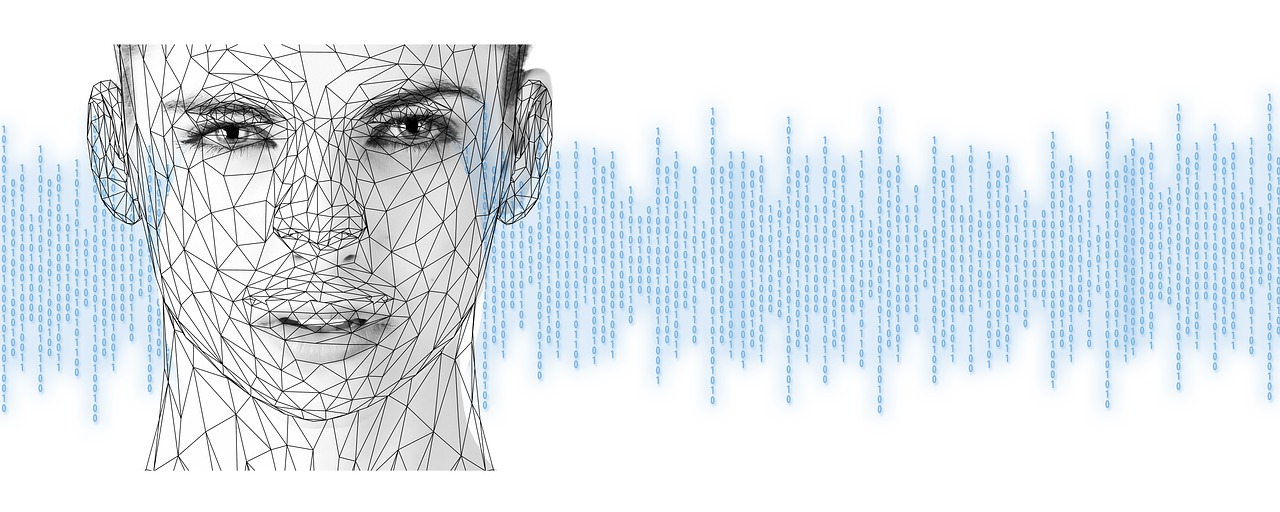
Yet the reality is more complicated. Cybersecurity knowledge is inherently dual-use. A vulnerability scanner can be used to find flaws for patching or for exploitation. An attack simulator can train defenders or help attackers refine tactics. Once the underlying model is accessible in one jurisdiction, replication becomes a matter of engineering effort, not legal permission. Even if Anthropic restricts direct access, the technical details—training data, model weights, and architectural insights—can be inferred or reconstructed from documentation, demonstrations, or partial releases.
What Triggered the Ban—and Why It Matters
According to reports, two events precipitated the export restriction. First, Anthropic granted access to Mythos through its partner program to a South Korean telecom company later identified by officials as having suspected ties to China. Second, Amazon’s internal research reportedly found a way to bypass safeguards in Fable 5, which the company described as a “jailbreak.” Anthropic countered that the issue was narrow, already patched, and not a systemic failure of safety measures.
Regardless of the specifics, the outcome was immediate: the U.S. Commerce Department issued a directive, and Anthropic suspended both models within about 90 minutes. The speed reflects the legal clarity of the order and the company’s need to avoid penalties, but it also highlights a practical reality: once a model is operational in the field, export controls can only act retroactively.
This episode raises a critical question: if a model is already in limited use by vetted partners, and if its underlying capabilities can be replicated or adapted elsewhere, does an export ban actually reduce global risk—or merely shift deployment to less transparent jurisdictions? The answer likely depends on whether the technology is physically bound to a specific location or exists primarily as executable code and knowledge.
The Dual-Use Dilemma: Defense Tools Are Also Offensive Tools
The central tension in cybersecurity AI is dual-use. A model that excels at finding software flaws can be used by defenders to patch systems or by attackers to discover zero-day vulnerabilities. Simulated attack environments can train blue teams or help red teams refine strategies. This ambiguity makes it difficult to classify such tools as purely defensive or offensive, complicating export control regimes that rely on clear categorization.
Export control lists typically distinguish between “intrusion software” and “cybersecurity tools,” but the line is blurry in practice. Many tools designed for penetration testing—such as Metasploit or Cobalt Strike—are used by both security professionals and malicious actors. Similarly, an AI model that generates exploit code or simulates phishing campaigns can be framed as a defensive training tool or an offensive capability, depending on intent and context.
Anthropic’s attempt to position Mythos as a purely defensive tool is understandable, but export controls are not designed for nuanced intent. They operate on distribution channels, not use cases. Once the model is available in one country, replication and redistribution become feasible. Even if Anthropic stops sharing model weights, the underlying techniques—such as fine-tuning on cybersecurity datasets or using reinforcement learning to improve vulnerability detection—can be independently developed or reverse-engineered from public demonstrations.




Real results from MEFAI's AI. Get $50 off the Pro plan.
Sponsored · Past performance is not indicative of future results. Not financial advice.


The Enforcement Challenge: Code Travels Faster Than Regulations
Export controls work best on physical goods with clear supply chains: chips, servers, or specialized hardware. They struggle with intangible assets like software, algorithms, and knowledge. Code can be copied, compressed, and transmitted across borders in seconds. Once a model is deployed in a partner environment, even if access is restricted, the technical details can leak through logs, screenshots, or developer discussions.
Moreover, the global AI ecosystem is deeply interconnected. Many organizations outside the U.S. already train or fine-tune their own cybersecurity models using public datasets, open research papers, and shared benchmarks. The idea that a single company’s export restriction can prevent the spread of such capabilities is optimistic at best. Even if Anthropic halts all foreign access, competitors in Europe, China, or elsewhere may independently develop similar systems.
The enforcement challenge is compounded by the fact that many countries do not recognize U.S. export controls as legally binding. Firms in South Korea, Japan, or the EU are not automatically obligated to comply with U.S. directives unless their products contain U.S.-origin technology or are sold through U.S.-based platforms. This creates a patchwork of compliance that bad actors can exploit.
What Comes Next: Three Possible Outcomes
The immediate outcome is clear: Mythos and Fable are offline for now. But what happens next depends on how Anthropic, the U.S. government, and global partners respond.
First, Anthropic may attempt to rebuild access under stricter controls—perhaps by relocating servers outside the U.S., using on-premises deployments, or switching to a licensing model that ties usage to specific entities rather than geography. Such moves could reduce exposure but would complicate operations and potentially limit adoption. The company might also push for clearer export control exemptions for cybersecurity tools framed as defensive, though this would require lobbying and regulatory changes.
Second, the U.S. government may refine its approach. It could expand the definition of controlled AI models, tighten partner vetting, or collaborate with allies to harmonize export rules. However, any expansion risks overreach—if controls become too broad, they could stifle innovation in cybersecurity research, which relies on openness and collaboration. The challenge is balancing national security concerns with the need to maintain a vibrant, global cybersecurity ecosystem.

Third, other AI labs may preemptively adjust their strategies. Companies like Mistral, Cohere, or Chinese firms could position their cybersecurity models as “open but safe,” releasing APIs with usage restrictions or offering sandboxed environments. Alternatively, they might accelerate development of open-weight models that are harder to control but more transparent. The result could be a bifurcation: controlled, U.S.-restricted models for vetted users, and open or alternative models elsewhere.
Practical Implications for Organizations and Policymakers
For organizations that relied on Mythos or Fable, the sudden shutdown creates a gap in advanced cybersecurity capabilities. Teams will need to pivot to alternative tools—whether open-source frameworks, commercial platforms, or in-house solutions. The incident highlights the risks of depending on a single vendor for cutting-edge cybersecurity AI, especially when access is subject to geopolitical decisions.
Policymakers face a dilemma: how to regulate frontier AI without repeating the mistakes of past export control regimes. The key may lie in focusing on outcomes rather than inputs. Instead of restricting models based on their capabilities, regulators could target high-risk use cases—such as deployment in critical infrastructure or by known adversarial actors. This approach would require better detection, attribution, and international coordination, but it would be more aligned with the reality of digital technology.
For the broader tech community, the episode underscores a fundamental truth: knowledge-intensive technologies cannot be contained by geography. Once a model’s architecture or training method is understood, replication is inevitable. Export controls can slow diffusion, but they cannot prevent it. The real challenge is building governance frameworks that encourage responsible development and deployment, rather than relying on barriers that history shows will be circumvented.
What to Watch in the Coming Months
Several developments will shape the future of AI export controls. First, watch for Anthropic’s next move—whether it negotiates a limited license, adjusts its model distribution strategy, or pauses cybersecurity AI development. Second, monitor how other countries respond. The EU, UK, and China are all developing AI regulations; their approaches to export-like restrictions will determine whether this becomes a global patchwork or a coordinated effort.
Third, track whether any alternative cybersecurity AI models emerge in response to the gap left by Mythos and Fable. Open-source projects, academic initiatives, or commercial alternatives could fill the void, especially if they are positioned as safer or more transparent. Finally, observe how U.S. agencies clarify their stance on AI model controls—whether they double down on enforcement or refine their approach to focus on high-risk scenarios.
In the end, the experiment with Mythos and Fable is less about whether export controls can work in theory, and more about whether they can work in practice. The historical record suggests they will struggle. The real question is how quickly the rest of the world adapts—and what new models of governance emerge when technology moves faster than regulation.
More in Artificial Intelligence

Trump Order Pulls Anthropic’s Newest AI Models Offline — What It Means for Labs, Security and Users
The White House ordered Anthropic to take its two latest AI models offline, citing unspecified national security concerns after Amazon researchers reported guardrail bypasses, reshaping AI policy, cyb

The Ubisoft Founder’s Legacy: How a French Gaming Pioneer Shaped AI in Interactive Media
The tragic death of Ubisoft co-founder Claude Guillemot highlights his enduring influence on global gaming, including the integration of AI in interactive storytelling and development.

How AI Chatbots Can Reinforce Delusional Beliefs Without Causing Them
A new framework explains how AI chatbots can strengthen delusional thinking through personalized, validating responses, even if they do not cause delusions directly.