AI Coding Assistants Heat Up: Market Leaders, Enterprise Pushes, and What’s Next for Developers
By Mag-Info Tech editorial · 2026-06-08

The race to build the best AI coding assistant has entered a new phase. What began as a tool for quick code snippets has evolved into a full-stack development environment embedded in the software lifecycle. In early June 2026, the competition among leading AI labs has sharpened into clear strategic positions: performance leadership, enterprise integration, cost accessibility, and model diversification. These moves are not just technical updates—they signal a shift in how software is built, tested, and maintained at scale.
This is more than a feature race. It’s a platform battle. Each company is staking a claim on where AI coding assistance fits in the development workflow: from rapid prototyping to long-term codebase maintenance. Developers are now evaluating assistants not just on raw code generation, but on how well they integrate with existing tools, support collaboration, and handle enterprise-grade complexity. The stakes are high—whoever wins developer trust could shape the future of software development for years. Let’s break down what’s happening, what it means for developers, and what to watch next.
The Current Leader: Anthropic’s Claude Code Holds the Performance Edge
Anthropic’s Claude Code has emerged as the market leader in AI coding assistance, a position it appears to have consolidated through consistent performance and developer adoption. Unlike general-purpose chatbots, Claude Code is purpose-built for software development tasks—generating functions, debugging, refactoring, and even managing multi-file changes. Its lead suggests that developers are prioritizing reliability and accuracy in complex coding scenarios over broader conversational flexibility.
The company’s focus on safety and context retention has resonated with teams working on large, sensitive codebases. In environments where security and compliance are critical—such as financial services or healthcare—Claude Code’s ability to maintain coherent context across thousands of lines of code and multiple dependencies gives it an edge. This is particularly important when AI suggestions must align with strict coding standards or regulatory requirements.
What sets Claude Code apart is not just its output quality, but its integration model. It operates as both a standalone assistant and a plugin within popular IDEs, allowing developers to use it without disrupting existing workflows. This dual approach has made it attractive to both individual developers and engineering teams looking to scale AI assistance across projects. As the market matures, performance leadership like this often becomes a flywheel—attracting more users, generating better training data, and reinforcing the model’s strengths.
OpenAI’s Enterprise Push: Codex Gets Business Plugins and Annotations
OpenAI is taking a clear enterprise-first approach with Codex, its AI coding assistant. In a strategic move, the company has added six new business-focused plugins designed to integrate Codex with internal tools, version control systems, and security scanners. These plugins allow teams to embed Codex directly into their CI/CD pipelines, ticketing systems, and documentation workflows—bridging the gap between AI assistance and operational processes.
Alongside plugins, OpenAI introduced an “annotations” feature that enables targeted code revisions. Instead of vague feedback like “fix this,” reviewers or AI reviewers can now highlight specific lines or functions and attach precise instructions. This granular control is crucial in enterprise settings where code reviews must be traceable and auditable. It also reduces the back-and-forth between developers and AI, streamlining the revision cycle.
But the most significant signal is OpenAI’s announcement that Codex capabilities will begin appearing directly inside ChatGPT in the coming weeks. This integration blurs the line between a general-purpose assistant and a specialized coding tool. For developers who already use ChatGPT for documentation or debugging, this means a seamless transition into deeper code assistance without switching interfaces. It’s a smart move to capture mindshare and embed Codex into daily workflows. However, it also raises questions about performance trade-offs—can a generalist model match the precision of a dedicated coding assistant?
Google Enters the Fray: Affordable Access with a $100/Month Tier and Coding-Optimized Models
Google is positioning itself as the accessible, cost-effective alternative in the AI coding assistant market. The company launched a $100 per month developer subscription tier, targeting individual developers and small teams who want high-quality coding assistance without enterprise-level pricing. This pricing strategy is a direct challenge to premium-only models and could democratize access to advanced AI tools.
At the core of Google’s offering is Gemini 3.5 Flash, a model optimized for coding and agentic workflows. Unlike some competitors that focus solely on code generation, Google emphasizes “agents”—autonomous or semi-autonomous systems that can plan, execute, and verify multi-step development tasks. For example, an agent might refactor a legacy module, update dependencies, run tests, and generate a changelog—all with minimal human input. This shift from “assistant” to “agent” reflects a broader industry trend: moving from reactive suggestions to proactive automation.
The combination of affordability and agentic capabilities makes Google a compelling option for resource-constrained teams. It also aligns with Google’s broader cloud strategy, where AI tools are gateways to higher cloud usage and ecosystem lock-in. For developers, this means access to cutting-edge models at a predictable cost, which is especially valuable for startups and indie hackers testing AI-driven development at scale.
Microsoft Joins the Model Race: A New Contender in AI Coding Assistance
Microsoft has entered the AI coding-model race, signaling its intent to compete not just as a platform provider (via GitHub Copilot), but as a model innovator. While details remain sparse, Microsoft’s move suggests it will offer its own AI coding models—possibly integrated with Azure AI services or Visual Studio. This is a significant development because Microsoft already dominates the developer tools ecosystem through GitHub, VS Code, and Azure DevOps.
By entering the model layer, Microsoft can reduce reliance on third-party models and tailor AI assistance to its own stack. For example, models could be optimized for .NET development, Windows-native APIs, or Azure cloud services. This vertical integration could give Microsoft an advantage in enterprise environments where consistency across tools and platforms is critical.
The entry also puts pressure on competitors to ensure their models work well within Microsoft’s ecosystem. If Microsoft’s models are optimized for Azure and VS Code, developers using those tools may see better performance and tighter integrations. This could accelerate adoption among enterprise teams already invested in Microsoft’s stack. The race is no longer just about who has the best model—it’s about who can deliver the best end-to-end experience within a developer’s existing environment.
The Integration Imperative: Plugins, IDEs, and the Future of Workflow
What’s becoming clear is that raw model performance is only part of the equation. The real competition is happening at the integration layer. AI coding assistants are no longer standalone tools—they’re becoming embedded in every stage of the development lifecycle. From code editors to version control, from issue trackers to deployment dashboards, the assistant must fit seamlessly into existing workflows.
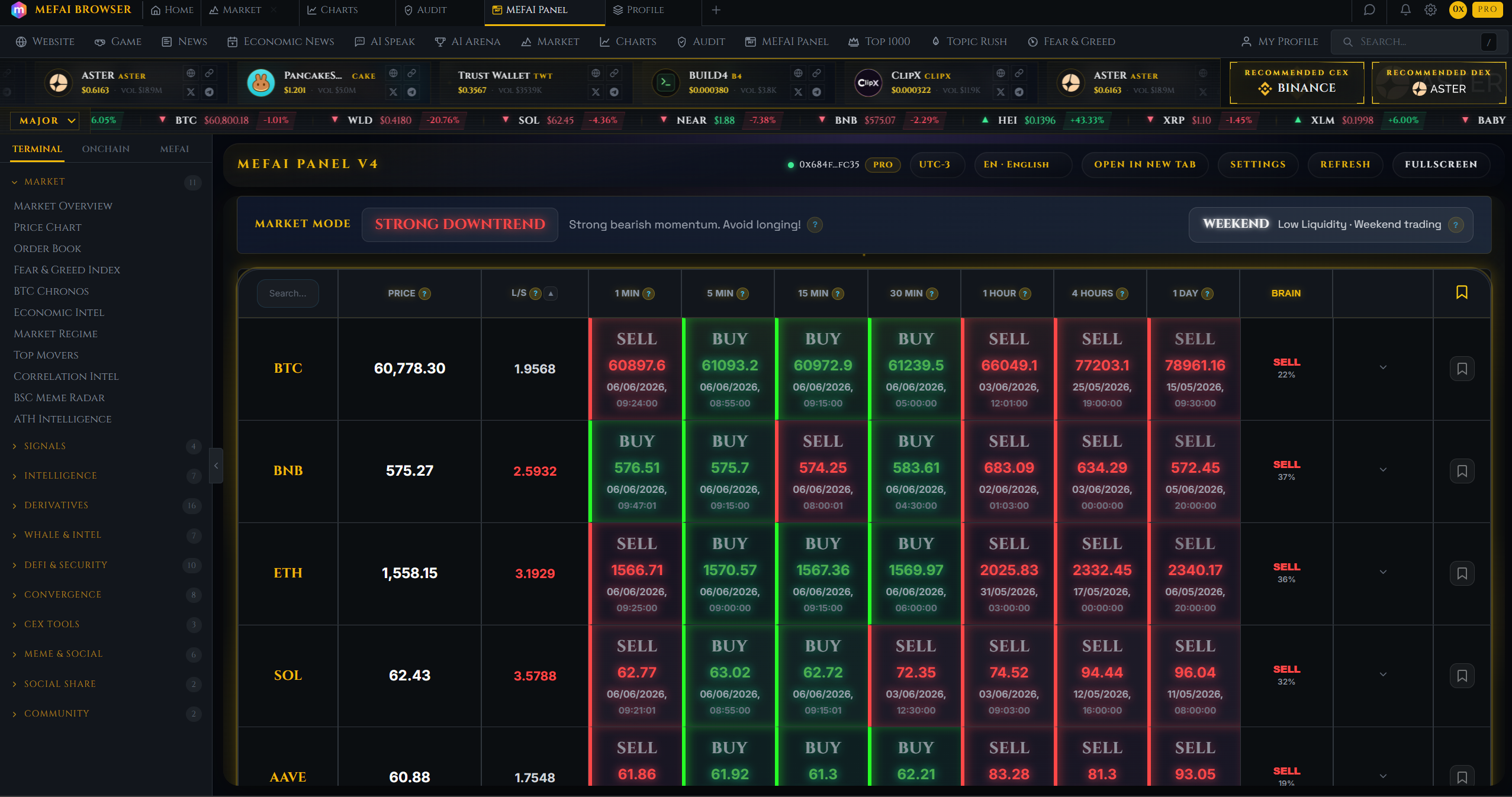
Real results from MEFAI's AI. Get $50 off the Pro plan.
Sponsored · Past performance is not indicative of future results. Not financial advice.

OpenAI’s plugin strategy and Microsoft’s ecosystem focus reflect this reality. Developers don’t want to switch tools or contexts every time they need help. They want a single interface that can answer questions, generate code, review changes, and deploy updates—all in one place. This is where integration becomes a moat: the more deeply an assistant is embedded, the harder it is for users to switch.
For teams evaluating assistants, integration should be a top criterion. Ask: Does it work in your IDE? Can it connect to your CI/CD system? Does it support your language or framework? Does it provide audit trails for compliance? These aren’t technical niceties—they’re operational necessities. The assistant that wins will be the one that disappears into the workflow, not the one that demands constant context switching.
Agentic Development: From Suggestions to Autonomous Workflows
Beyond integration, the most transformative shift is the rise of agentic AI in coding. Where early assistants were reactive—answering questions or generating snippets—newer models are becoming proactive agents that can plan and execute tasks. Google’s emphasis on agents is a leading indicator of this trend.
Imagine an agent that can take a high-level requirement—“refactor the user authentication module to support OAuth 2.0”—and break it down into steps: update the schema, modify the login flow, add token validation, update tests, and generate documentation. The agent doesn’t just suggest code—it executes, verifies, and documents the change. This level of autonomy could dramatically reduce the time spent on repetitive or boilerplate tasks.
But agentic development comes with risks. Autonomous changes must be sandboxed, tested, and reviewed. Without guardrails, agents could introduce bugs, security flaws, or compliance violations. This is why features like OpenAI’s annotations and Anthropic’s focus on context retention are so important—they provide the oversight needed to make agents safe and reliable. For developers, the key is to adopt agentic tools incrementally, starting with low-risk tasks and gradually expanding as trust is established.
Cost, Accessibility, and the Democratization of AI Development
Google’s $100 per month tier is more than a pricing strategy—it’s a statement about accessibility. For years, AI tools were priced at enterprise levels, accessible only to large companies with deep pockets. But as models improve and competition intensifies, prices are dropping. This democratization is crucial for innovation. Independent developers, startups, and researchers can now experiment with advanced AI coding tools without financial barriers.
Affordability also enables broader experimentation. Teams can try multiple assistants, compare outputs, and choose the best fit for their needs. This fosters a healthier ecosystem where quality and usability—not just brand power—determine success. It also pressures other providers to offer transparent, competitive pricing, benefiting users across the board.
For developers in emerging markets or educational settings, this accessibility could be transformative. Imagine a student in Brazil or India using an AI assistant to learn programming, debug code, and build projects—all at a fraction of the cost of traditional tools. The long-term impact on global software talent could be profound.
What to Watch Next: Standards, Security, and the Battle for Developer Mindshare
As the market evolves, three areas will likely define the next phase of competition: standards, security, and developer mindshare.
First, standards. There’s currently no unified way for AI assistants to interact with codebases, IDEs, or version control systems. Open standards—like those being discussed in the AI Alliance or W3C—could emerge to define how assistants parse code, generate diffs, or log actions. Without standards, integration remains fragmented, slowing adoption.
Second, security. AI-generated code can introduce vulnerabilities—from hardcoded secrets to insecure API calls. Companies are starting to integrate security scanners directly into AI workflows, but this is still early. Expect to see more built-in scanning, sandboxed execution, and compliance checks embedded in assistants. Security will become a core differentiator, not an afterthought.
Third, developer mindshare. The assistant that developers use daily will shape the future of software development. This is why OpenAI’s integration of Codex into ChatGPT is so strategic—it captures users at the point of need. Anthropic’s focus on performance and safety appeals to enterprise teams. Google’s agentic approach targets efficiency and cost. Microsoft’s ecosystem play leverages existing trust. Each strategy reflects a different vision of how AI should assist developers.
Practical Takeaways for Developers and Teams
For individual developers, the choice of AI assistant now depends on more than just model quality. Consider your workflow: Do you work in a large enterprise with strict compliance needs? Anthropic’s Claude Code may be the best fit. Do you rely on Microsoft tools like VS Code and Azure? Microsoft’s entry could offer the tightest integration. Are you building agents or automating workflows? Google’s agentic approach might be ideal. And if you’re budget-conscious, Google’s $100 tier provides a cost-effective entry point.
For engineering leaders, the decision is broader. Evaluate not just the model, but the ecosystem: plugin support, IDE compatibility, security features, and pricing models. Plan for a multi-assistant strategy—using different tools for different tasks. Invest in training teams on AI-assisted development best practices, especially around review, testing, and audit trails. And prepare for agentic tools by defining clear boundaries and approval workflows.
Finally, stay vigilant about security and compliance. AI-generated code should be treated as untrusted until verified. Integrate security scanning into your AI workflows and maintain human oversight for critical changes. The goal isn’t to replace developers—it’s to augment them, making them faster, more accurate, and more creative.
The AI coding-assistant market is no longer a novelty—it’s a foundational layer of modern software development. With Anthropic leading on performance, OpenAI pushing enterprise integration, Google making tools accessible, and Microsoft entering the model race, the competition is heating up. The next phase won’t be won by the best model alone, but by the best integration, the safest workflows, and the deepest developer trust. For those who can navigate this landscape, the rewards are clear: faster development, fewer bugs, and the ability to build software at a scale previously unimaginable. For everyone else, the risk is falling behind.
More in Artificial Intelligence

Crypto Recovery on Shaky Ground as Major Tech IPOs Threaten Liquidity Drain
Bitcoin's rebound above $63,000 faces headwinds from accelerating ETF outflows, subdued trading volumes, and looming liquidity drain from massive SpaceX and Anthropic IPOs.

The AI Coding-Assistant Race Heats Up: What the New Moves Mean for Developers
In June 2026 the AI coding-assistant market shifted with new enterprise moves from OpenAI, Google and Microsoft while Anthropic’s Claude Code leads—here’s what developers should watch next.

MetaMask’s AI Agent Wallet: What It Means for Self-Custody, Security and DeFi Automation
MetaMask’s new AI agent wallet lets autonomous software trade across DeFi while keeping users in control, with built-in transaction simulation, threat scanning and MEV protection.