
AI Agents Platforms 2026: The Definitive Buyer's Guide to Autonomous Automation
By Mag-Info Tech editorial · 2026-06-07

Understanding the AI Agent Platform Landscape
The concept of an AI agent has evolved beyond simple chatbots to represent autonomous software entities that can perceive their environment, reason through complex tasks, and take actions to achieve defined goals. An AI agent platform, therefore, is not just a single model but the comprehensive ecosystem—integrating foundation models, orchestration logic, memory, and tool-use—that enables these agents to function. As we move into 2026, these platforms are transitioning from experimental frameworks to critical components of business automation, software development, and personal productivity. Choosing the right one requires a clear understanding of your objectives, technical constraints, and the trade-offs between flexibility and ease of use.
The market now spans a broad spectrum, from lightweight, code-first frameworks designed for developers building custom solutions, to no-code enterprise suites aimed at business analysts automating workflows. The core decision often boils down to a fundamental question: are you building a bespoke agent for a highly specific, novel problem, or are you deploying pre-built, configurable agents for common business processes? The former demands a robust, flexible development framework, while the latter benefits from a platform with rich integrations and a managed environment. This guide breaks down the leading options across this spectrum, focusing on their core philosophy, ideal user, and practical considerations for integration and scaling.
Code-First Frameworks for Custom Agent Development
For developers and AI teams building deeply customized agents, open-source frameworks provide unparalleled control and flexibility. LangChain has established itself as a foundational toolkit in this space. It offers a standardized way to connect large language models (LLMs) with external data sources, APIs, and computational tools. Its strength lies in its modularity and the extensive ecosystem of "chains" and "agents" that can be assembled to create complex reasoning pipelines. However, its power comes with a steeper learning curve. It requires solid programming skills, particularly in Python, and a willingness to manage dependencies and orchestration logic. LangChain is best suited for software engineers and data scientists who need to build agents with very specific tool-use behaviors, like a research assistant that must cross-reference multiple academic databases or a code-generation agent tied to a proprietary library.

AutoGPT and its philosophical successors represent a more ambitious, though sometimes less stable, approach to full autonomy. These platforms are designed to take a high-level objective and recursively break it down into sub-tasks, using the LLM to plan, execute, and self-correct. They are powerful for exploratory tasks where the end path is not fully known, such as conducting market research or drafting comprehensive reports from scattered sources. The primary trade-off is reliability; these agents can sometimes enter loops, misinterpret goals, or incur significant computational costs due to iterative processing. They are a compelling choice for tech-forward teams exploring the frontiers of autonomy but may be too unpredictable for mission-critical, deterministic business processes without significant human oversight and guardrails.
No-Code Enterprise Suites and Business Process Automation
On the opposite end of the spectrum are platforms designed to bring agent capabilities to business users through visual interfaces and pre-built connectors. Microsoft Power Automate, with its recent deep integration of Copilot AI, is a leading example. It allows users to build flows that can be triggered by events and now includes steps where an AI agent can reason over data, draft emails, or summarize documents within the workflow. Its key advantage is the seamless connection to the vast Microsoft ecosystem (Teams, Dynamics 365, SharePoint) and thousands of other enterprise apps. This makes it an ideal choice for organizations already invested in Microsoft's stack, looking to automate processes like contract review, data entry from forms, or customer support ticket routing without writing code.
Zapier, known for its simple app-to-app automations, has also entered the AI agent space with "AI Actions." This feature allows users to incorporate natural language instructions into their multi-step Zaps, enabling the agent to perform actions like updating records or generating content based on unstructured input. While not as deep in its reasoning capabilities as code-first frameworks, Zapier’s strength is its incredible breadth of integrations (over 6,000 apps) and approachability. It is perfectly suited for small to medium-sized businesses, or teams within larger companies, that want to quickly prototype and deploy AI-assisted workflows for tasks like lead qualification, social media content scheduling, or internal data synchronization across disconnected tools.
The "AI-Native" Platform Model and Integrated Suites
A third category is emerging: platforms built from the ground up with agent orchestration as a core feature, often as part of a broader AI development suite. Google's Vertex AI Agent Builder and Amazon Bedrock Agents fall into this category. These services provide managed infrastructure for building, deploying, and scaling enterprise-grade agents. They offer pre-built templates for common use cases (like a customer service agent), managed access to a choice of foundation models (from Google's Gemini family or Amazon's partners like Anthropic), and critical enterprise features like built-in evaluation, monitoring, and security controls. They represent a middle ground, offering more scaffolding than raw code frameworks but more depth than no-code tools. They are best for cloud-native engineering teams that need to build, host, and scale robust agents securely within their existing cloud infrastructure (GCP or AWS).
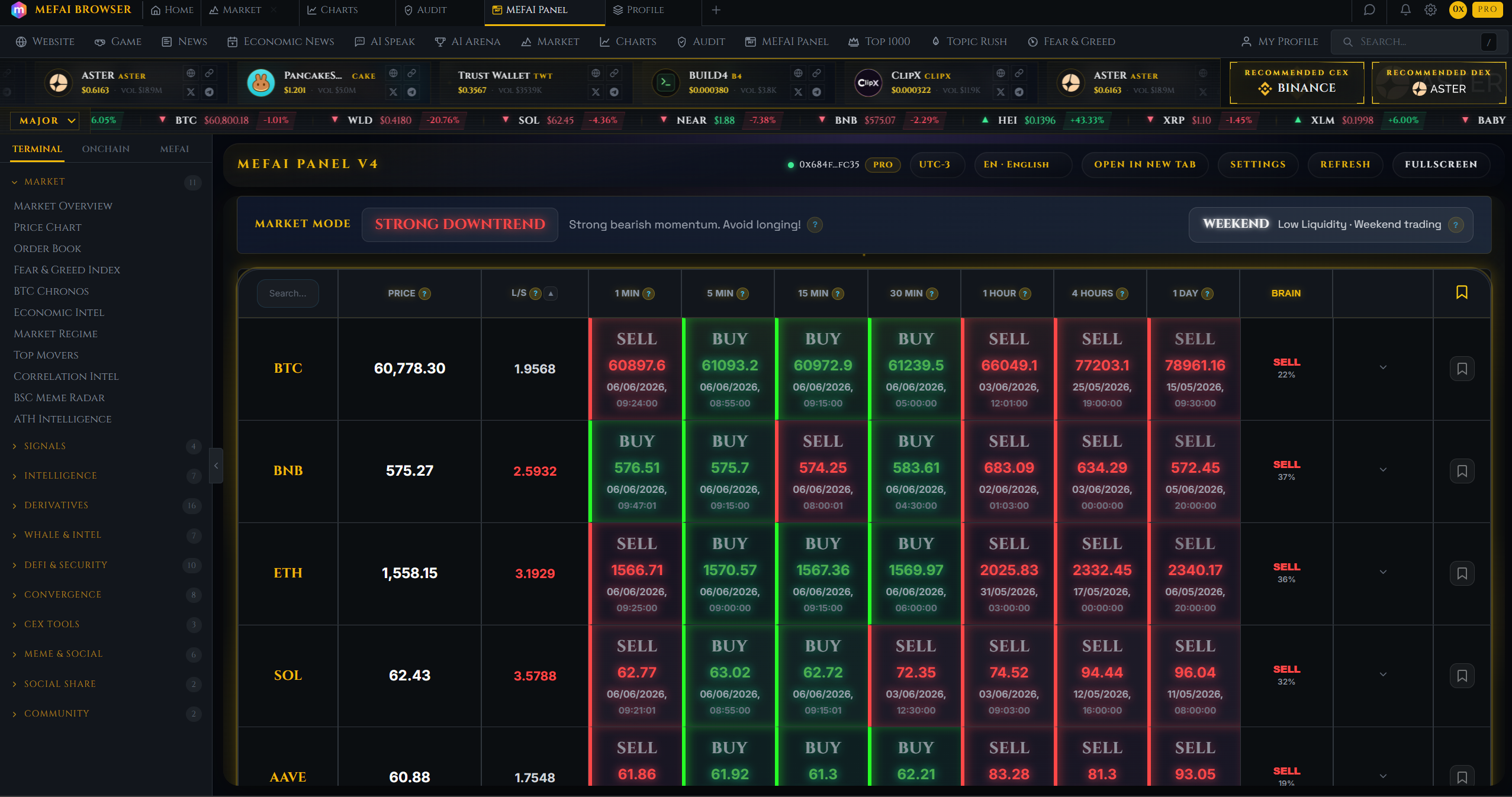
Real results from MEFAI's AI. Get $50 off the Pro plan.
Sponsored · Past performance is not indicative of future results. Not financial advice.

Furthermore, some AI model providers are evolving into platform players. Anthropic, with its Claude model, is advancing concepts like "Projects," which allow for the creation of custom, persistent agent instances with specific instructions and knowledge bases. While not a full-fledged platform in the same vein as the others, it represents a trend where the model itself becomes a programmable, stateful entity. This approach is ideal for developers who want to build deeply conversational, context-aware agents without managing separate orchestration layers, leveraging the model's inherent reasoning and instruction-following abilities as the primary engine.
Critical Selection Criteria: How to Choose Your Platform
Selecting the right AI agent platform requires a systematic evaluation against your specific needs. Start with use case complexity and autonomy. If your goal is to automate a well-defined, step-by-step business process with clear rules, a no-code platform like Power Automate or Zapier will deliver value fastest. If you are tackling an open-ended problem that requires dynamic planning and tool use (e.g., "analyze this dataset and find anomalous trends"), a code-first framework is essential. Secondly, evaluate the required tool integration. A platform is only as good as the external systems it can connect to. Enterprise suites excel here with native connectors, while frameworks like LangChain require you to build or find community-maintained tool wrappers.
Third, consider your team's technical expertise and maintenance appetite. No-code platforms minimize the operational burden, as the provider manages scaling, updates, and infrastructure. Code-first frameworks transfer that responsibility to your team, offering freedom but requiring DevOps and MLOps maturity to run in production. Fourth, think about cost structure and scalability. Enterprise suites often have predictable subscription pricing based on flows or actions, while code-first approaches incur direct costs for LLM API calls and compute, which can be less predictable but more cost-efficient at high volume. Finally, never overlook security, privacy, and compliance. Enterprise-grade platforms offer crucial features like data encryption, audit logs, and role-based access control that are non-negotiable for processing sensitive data.
Common Mistakes and How to Avoid Them
One of the most common pitfalls is underestimating the complexity of agent reasoning. Teams often start with a simple prompt and expect flawless autonomous behavior, only to find the agent fails on edge cases. The solution is to adopt an iterative, test-driven development approach. Begin with narrow, well-scoped tasks, implement robust evaluation metrics (not just output quality, but cost and latency), and build in human-in-the-loop checkpoints for critical actions. Another mistake is over-engineering from the start. It's tempting to build a "do-everything" general-purpose agent, but these are notoriously hard to control and debug. Instead, start with focused, single-purpose agents that excel at one job, and compose them later if needed.

A third frequent error is ignoring the observability gap. Autonomous agents can make unexpected decisions, and without proper logging and tracing, debugging becomes nearly impossible. Ensure your chosen platform provides clear visibility into the agent's thought process—the intermediate steps, the tools it decided to call, and why. Enterprise suites often have built-in dashboards for this, while with frameworks, you must implement your own logging from the outset. Lastly, failing to define clear boundaries and ethics is a critical risk. Every agent must have strict guardrails regarding what actions it can take, what data it can access, and when it must defer to a human. This is not just a technical requirement but a foundational principle for responsible deployment.
The Verdict: Matching Platform to Profile
In 2026, there is no single "best" AI agent platform—only the best fit for a particular set of needs. For software developers and AI researchers building novel, high-customization agents, LangChain remains a top choice for its flexibility and community, though with the caveat that it requires significant engineering skill. For enterprise IT and business operations teams focused on automating workflows within an existing ecosystem, Microsoft Power Automate with Copilot offers a powerful, integrated, and scalable solution.
For technical teams in cloud-native environments seeking a managed, secure foundation for building and scaling production agents, AWS Bedrock Agents or Google Vertex AI Agent Builder provide the necessary robust infrastructure. For small businesses and non-technical teams needing quick wins and vast app connectivity, Zapier's AI Actions is an excellent starting point. Ultimately, the right platform will align with your team's skills, integrate with your existing tools, and scale with your ambitions. Begin with a clear, narrow problem, choose the tool that matches your capability level, and build from there. The age of practical, autonomous AI agents is here, and selecting the right platform is the first step toward harnessing their transformative potential.
More in Artificial Intelligence

Crypto Recovery on Shaky Ground as Major Tech IPOs Threaten Liquidity Drain
Bitcoin's rebound above $63,000 faces headwinds from accelerating ETF outflows, subdued trading volumes, and looming liquidity drain from massive SpaceX and Anthropic IPOs.

The AI Coding-Assistant Race Heats Up: What the New Moves Mean for Developers
In June 2026 the AI coding-assistant market shifted with new enterprise moves from OpenAI, Google and Microsoft while Anthropic’s Claude Code leads—here’s what developers should watch next.

MetaMask’s AI Agent Wallet: What It Means for Self-Custody, Security and DeFi Automation
MetaMask’s new AI agent wallet lets autonomous software trade across DeFi while keeping users in control, with built-in transaction simulation, threat scanning and MEV protection.